


A Textile Trail
Come indulge in a rich, diverse cultural journey, complete with historical context, wrapped with local interactions and cuisine, with RARE India. A journey filled with new friendships, fonder appreciation and understanding of Indian textiles, and memories worth a thousand counts.
The notion of the culture of India and its textiles is interwoven. There is nothing quite like the insightful embrace of one of India's most respected and valued cultures — textiles. RARE takes you on a journey to meet textile craft communities in Gujarat.
It begins in Ahmedabad, the bustling metropolis, with a curated walk through the Calico Museum. The museum archives textiles from the royal courts of the Mughals and other provincial kingdoms and gives an insight into the intricate techniques of dyeing, weaving, printing, and embroidery from across India. Interactions led by our textile designer and visits to noted Textile and Craft organisations, interspersed with regional food soirees and a heritage walk in the old city of Ahmedabad, add a different dimension to our stay.
A meeting with artisans in Bhuj allows us to spiral into discussions on traditional printing and weaving techniques and embroidery styles. As we surround ourselves by looms, blocks, colourful yarns and threads, RARE offers a chance to get up close and personal with the craft community as they share some of their challenges with us. Captivating real-life experiences of the local textile craftsmen offers a deeper, richer journey into the quality of craftsmanship that Gujarati textile is all about.
We partner with various social enterprises to provide unique encounters with bell metal and leather craftsmen and craftswomen working on sustaining the traditional embroidery of the Mochi Bharat (cobbler's stitch) and Rabari techniques unique to Gujarat. Interactions are hosted at Khamir and Shrujan, responsible for providing a sustainable means of income generation for over 3,000 women in over 100 villages in the region.
To add to our creative pursuits and textile inspiration, meet a textile intellectual who walks us through a tie-dye technique known as Bandhani and another who works with Ajrakh, another very elaborate form of traditional natural dyed printing. We then set our eyes on the most exquisite hand-embroidered and patchwork garments and accessories, using only natural fibres and dyes, at a grassroots enterprise committed to preserving the traditional arts and textiles of Kutch.
Before heading back to Ahmedabad, we meet the weavers keeping the tradition of Patan Patola, the famous Ikat, alive. As delicate silk and cotton threads are warped and wefted, dyed, and tied, the women begin to transform simple threads into extraordinary fabrics.
-430x433.webp&w=3840&q=75)
Each Day on A RARE Itinerary in AHMEDABAD AND KUTCH
DAY 01
Curated walk around the world-renowned Calico Museum of Textiles, archiving textiles from the Mughal and Provincial Courts with a display of intricate dyeing, weaving, printing, and embroidery techniques from across India.
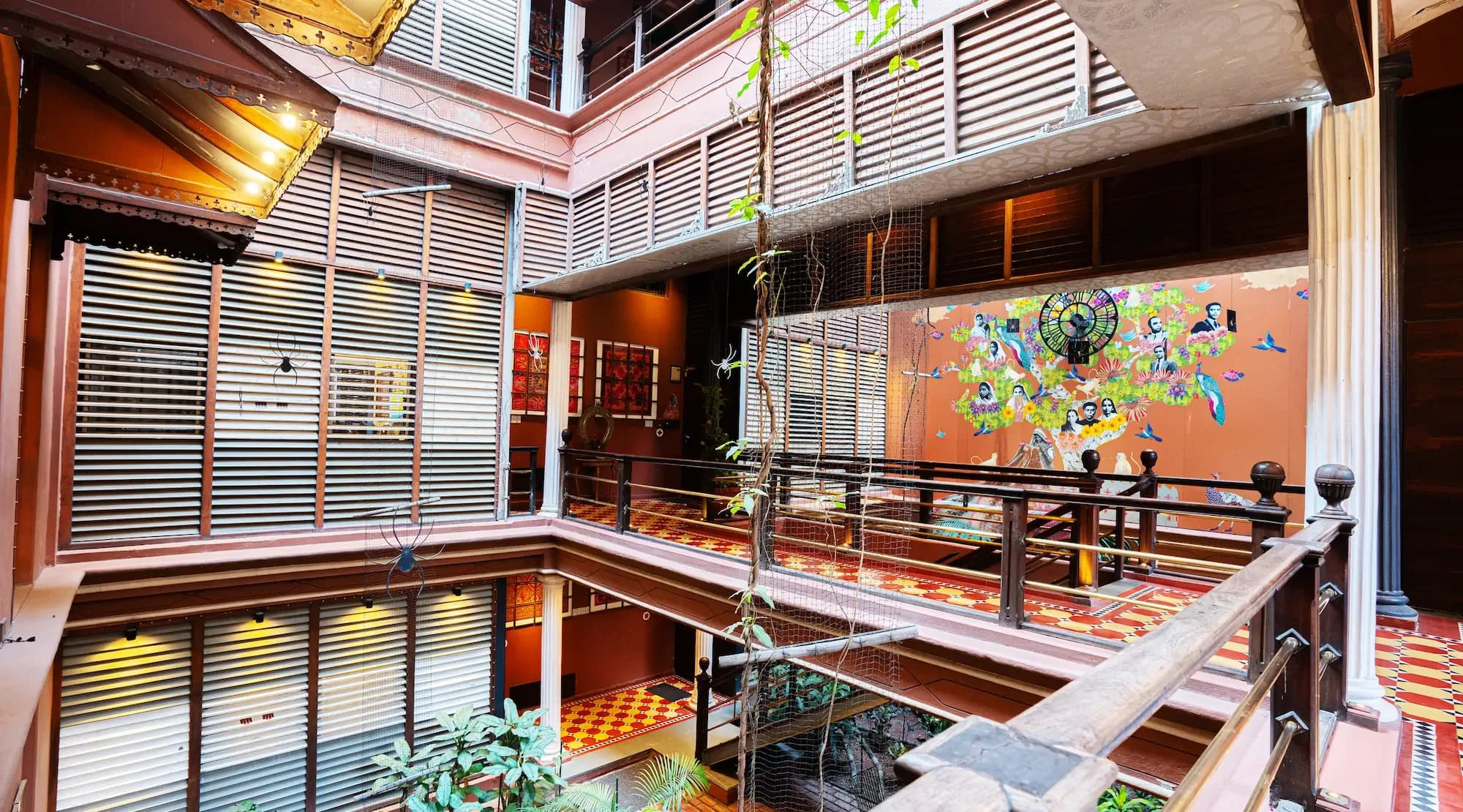
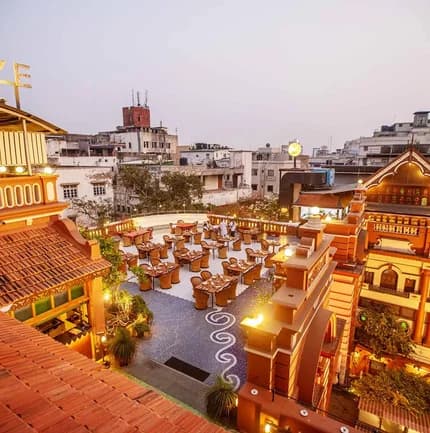
Visit Sabarmati Ashram (Gandhi Ashram) to learn more about Mahatma Gandhi’s life. Meet a handful of artists that still make hand-painted Mata ni Pachedis, a kalamkari art form traditional to Gujarat. Today, only five families are left practising this craft, which takes more than a month to complete just one pachedi. Check out the in-house textile museum of the hotel you are staying in. Stay at House of MG. Meals: Lunch & dinner
DAY 02
Heritage walk in the old city, including exploring old havelis and Rani No Hajeero, the quintessential Amdavaadi market. Visit an organisation and understand traditional Indian embroidery techniques like Aahir embroidery, Rabari embroidery, etc. Talk to the lady who started this enterprise.
Visit the Kasturbhai Lalbhai Museum, where some of the oldest works in fine art, ranging from 16th-century Mughal paintings to modern works by names like Anjolie Ela Menon and Amrita Shergill, can be seen. Visit the studio of a Master embroiderer, textile designer, and fashion designer. His works are hung in the Gallery Art Motif in the Capital. Visit an artist who has devoted his life to ply-split braiding, a traditional technique used to make camel belts.Stay at House of MG. Meals: Breakfast, lunch, & dinner
DAY 03
Visit master craftsmen and learn about Ajrakh. Ajrakh literally means aaj ke din rakh, or ‘keep it for today, because that is what the process is. Nature plays an important role in the making of Ajrakh. Craftsmen work in total harmony with their environment, where the sun, river, animals, trees, and mud are all part of its making. Also visit a young weaver who is using her loom to create art, most specifically using landscapes to become woven pictures. Stay at Bhuj House. Meals: Breakfast, lunch, & dinner.
DAY 04
Today we will see another dying craft form of rug weaving— another form of weaving that is fast going extinct. After our interactions, we drive down to another social enterprise whose name means ‘intrinsic pride’ in Kachchhi, the local language. It serves as a platform for the promotion of traditional handicrafts and allied cultural practises, the processes involved in their creation, and the preservation of culture, community, and local environments. Spend time looking at other crafts that Kutch is also home to wood, leather, pottery, and metal crafts. Lunch at Khamir.
Next, visit a designer atelier passionate about creating and working with local artisans. Also visit a collaborative of five leading craft organisations in Bhuj. Stay at Bhuj House. Meals: Breakfast, lunch & dinner.
DAY 05
Head to Bhujodi, in the heart of Kutch, to see the exquisite collection of vintage textiles. Meet the master craftsman, whose community is known for its extra weft wool weaving.
Head out to visit a museum, which is a grassroots social enterprise dedicated to the preservation of traditional arts. Uniquely committed to documenting existing traditions, the Trust maintains a collection of heirloom textiles housed in a local Museum. Next, meet with a young artist couple. Using a variety of dying techniques taught to them by their family members, the couple creates richly coloured, patterned, and textured shawls and caftans in Bandhini. Meet a textile intellectual who walks us through the laborious all-hand tie-dye printing process technique of Bandhini.
See a vintage textile collection. The collector was an avid textile collector and textile expert; look at some of his collections dating back to the late 1800s and early 1900s. Stay at Bhuj House. Meals: Breakfast, lunch & dinner.
DAY 06
Drive down to Nirona village to see Rogan Art, an ancient textile art with its origins in Persia that came to Nirona village, Kutch, Gujarat, around 400 years ago. Then head to visit a renowned quilter who works with fine Ajrakh prints and converts them into traditional gudri quilts and bedcovers. Visit a village that is home to traditional embroidery. Post lunch, visit Kalo Dungar (black hill) which marks Kutch’s highest point (462 m).
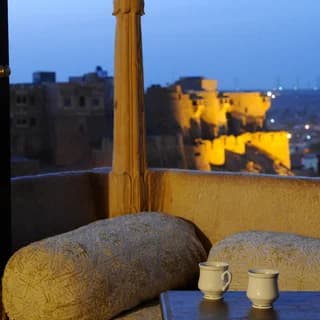
The evening will be spent at the great Rann of Kutch; we are here to see the sunset. Soak in the spirit of the Rann. As you wait for moonlight, you realise that the sun, moon, and stars have fascinated humankind since time immemorial. Stay at Mehfil E Rann/Shaam E Sarhad. Meals: Breakfast, lunch & dinner.
DAY 07
After breakfast, leave for Dasada for an experience of the Little Rann of Kutch. Go on a village safari. It will give you an opportunity to engage with the communities, observe their unique weaving practises, and explore the handicrafts of the region. Visit a weaver to see yet another craft form that is being revived: a 700-year-old traditional hand weaving technique. Stay at Rann Riders by Kaafila. Meals: Breakfast, lunch & dinner.
DAY 08
Go for a morning safari around the Little Rann of Kutch, an Indian Wild Ass Sanctuary rich in biodiversity. A quick stopover at the Sun Temple in Modhera and a visit to Patan Step Well. Visit the family; they are the only ones weaving the double ikat patan patola in natural dyes, an art handed down in the family since the 11th century (approx. 35 generations). Meals: Breakfast & lunch
After all these visits, head straight to Ahmedabad airport for your return flight












-430x433.webp&w=3840&q=75)