

Echoes of the Forest: RARE Wildlife Chronicles
Growing up in the heart of the city, I always felt a quiet call from the forests—a whisper carried on the wind, a longing stirred by the rustle of trees. As a child, I sensed that the natural world was trying to speak to me, and I yearned to understand its language. I chased the dream of one day trading the noise of urban life for the serenade of birds and the sigh of the forest. A decade has passed, and now, as I sit with my coffee, watching grey francolins forage and walking through sal trees that seem to guide my every step, I can proudly call the forests of Kanha my home.
The forest breathes life into every moment, and with a little patience, the most extraordinary things can be found in the smallest details. Like many, I sought the grandeur of large, iconic species—the ones that define our idea of wilderness. But over the years, the forest has taught me to see beyond the obvious. Now, even during fleeting city escapes, I find myself entranced by the flash of a butterfly’s wings or the intricate patterns of a beetle. It makes me wonder how I ever missed these wonders before.
In this blog, we invite you to step into the wild through the eyes of the naturalists from the RARE collection. They share their most intimate, unforgettable moments—experiences that reveal the hidden treasures of nature, reminding us that the rarest wonders often lie in plain sight, for those willing to truly see.
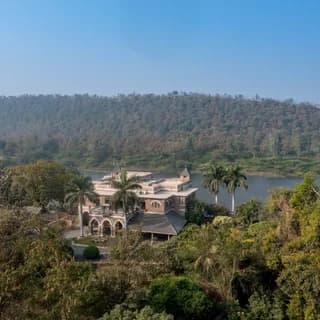
Image credit Sanctuary Resort
Safaris can quickly become an obsession. Each drive brings unexpected thrills, fuelled by early wake-up calls and the aroma of fresh coffee as you prepare to enter the park. With October 1st marking the reopening of many National Parks post-monsoon, guides and lodge staff share greetings, eager for the season ahead.
As Greek historian Hippocrates noted, “Walking is man’s best medicine,” and science supports this. Nature’s vibrant greens rejuvenate both body and mind, making leisurely hikes at RARE properties an ideal holiday activity. While photos of majestic wildlife are captivating, often the quiet discoveries on foot leave lasting memories. Our journey begins, highlighting remarkable finds shared by naturalists from their verdant offices.
Red billed blue magpie, image credit Snehaa Sundaram
At an elevation of 1,000 to 7,500 meters, nestled against the majestic Annapurna and Machapuchare mountain ranges, Tiger Mountain Pokhara Lodge (TMPL) offers a breathtaking panorama of forests, lakes, and caves. My first conversation with Marcus Cotton, the owner of TMPL, immediately resonated with me, as we shared a deep conservation ethos. Marcus passionately described their efforts to collaborate with the local community to declare the forest surrounding the lodge a community forest, enhancing its protection. “With the people and by the people” is the guiding principle behind their work to preserve these forests.
Nepal is often celebrated as a birdwatcher's paradise, and around TMPL resides one of the country’s endemic treasures: the Spiny Babbler (Turdoides nipalensis). A shy and elusive species, this bird continues to intrigue researchers due to its limited range in west-central and east-central Nepal. Similar in size to the jungle babbler, the Spiny Babbler stands out with its whitish face, long tail, and distinct decurved bill. It is also known for its unmistakable loud call, especially from April to June, and sometimes even into August, when males emerge from dense scrub to sing from atop bushes, hoping to impress potential mates.
Black Bittern, image credit Jim’s Jungle Retreat
Moving south to Uttarakhand, we find Jim Corbett Tiger Reserve, established in 1936 and still regarded as a model for forest protection. Though human intervention often leads to forest loss, there is always hope for restoration. In the 1970s, when hunting was officially banned, hunters' knowledge was redirected toward conservation efforts. Jim’s Jungle Retreat shares a similar story—dedicated to rewilding crucial forest land once threatened by deforestation. In Corbett, tigers and elephants are often the focus, but nature holds many surprises.
One such surprise, shared by their naturalist Manoj, was neither orange nor large. Instead, it was the inky, elusive form of a Black Bittern (Ixobrychus flavicollis), slipping like a shadow through the reeds near a man-made waterhole that thrives with life, thanks to their conservation efforts. Its "booming" call and presence as the largest of its species left an indelible mark—just one of the many wonders of Corbett's restored wilderness within the property.
Tokay gecko, image credit Snehaa Sundaram
Far to the east, in the land of the one-horned Rhinoceros, lies Kaziranga National Park, one of India’s most celebrated conservation successes. Close to its Western Range, Diphlu River Lodge offers the perfect vantage point—perched in their machans, guests might catch sight of elephants, rhinos, swamp deer, hog deer, and wild buffalo. Yet, the region has a special resident who is neither a bird nor a mammal—the Tokay Gecko.
During nature walks or quiet nights, you might hear its distinctive bark or chirp—aptly named for the sound it makes. The Tokay Gecko is one of the largest living geckos, native to Asia and parts of the Pacific. Its bluish-green or brown skin, adorned with orange speckles, makes it a striking sight but also a target in the exotic pet trade. With expert camouflage, they blend seamlessly into their surroundings, often leaving only their sparkling eyes to give them away. Spotting one in the wild, free, and elusive, is always a test of patience and a rewarding experience.
Indian leopard, image credit Dera Amer
Heading west to Jaipur, known for its vibrant history and culture, the city also surprises as a wildlife hub. Jhalana Wildlife Sanctuary is a popular destination, but hidden away is Dera Amer—a 180-acre piece of once-neglected scrubland transformed into a wild haven, offering a perfect glamping escape from the city’s bustle.
Anirudh Singh shared a remarkable experience from an early morning walk with guests, birdwatching for Sirkeer Malkohas, Paradise Flycatchers, and Black Francolins. As they meandered through the property, the first rays of sunlight filtered through the trees, casting golden hues over the Aravalli Range’s boulders. Suddenly, perched on a boulder, they spotted an unexpected guest—a leopard, lounging in the warm morning light. For nearly half an hour, it remained utterly unbothered, soaking up the sun before quietly retreating into the bushes. Spotting a leopard on a safari is always thrilling, but encountering one so relaxed, just yards away from the property, creates a memory that lasts forever.
Indian Bengal fox, image credit, RAAS Chhatrasagar
RAAS Chhatrasagar beautifully captures the romance of luxury, offering a home away from home with uninterrupted views and a deep connection to the wilderness. With no sign of human habitation in sight, the silence invites guests into the world of wildlife. Hosting over 250 species of birds, the property is a paradise for birdwatchers—whether from the comfort of your porch, on a stroll around the estate, or on a guided safari with experienced naturalists.
Mohamed Ghouse, a naturalist, shares one such memorable encounter: “It was a misty morning after a night of rain. I had a family of seven, eager to spot birds, all eyes scanning the bushes and treetops for movement. Suddenly, a young boy in the back seat asked, ‘Can we see a village?’ So, we took a turn toward one. As the sun pierced through the lifting fog, on the edge of the road stood a tawny-furred Indian Bengal Fox (Vulpes bengalensis), its bright eyes watching us cautiously.”
Ghouse’s excitement reflected the rarity of this sighting—it was a special moment, a triumph in the quiet stillness. In nature, you never know what surprises await around the next corner.
Brown headed barbet, image credit Khem Villas
Ranthambore National Park, in eastern Rajasthan, was once a private hunting reserve for the Maharaja of Jaipur. Today, it is a haven for wildlife, famous for its tigers but equally remarkable for its diverse inhabitants: leopards, sloth bears, striped hyenas, golden jackals, jungle cats, honey badgers, and the elusive caracal. The park’s thriving prey base—sambar, nilgai, chinkara, and spotted deer—ensures the predators remain active, reminiscent of classic NatGeo scenes in the wild.
Dr. Goverdhan Singh Rathore, son of the legendary Fateh Singh Rathore, who played a pivotal role in putting Ranthambore on the map, founded Khem Villas, a jungle camp that offers an idyllic setting overlooking the forest. The family's deep connection to tiger conservation, along with their collaboration with the local community, is woven into the essence of the lodge.
Two male wasps drilling in a fig, image credit Khem Villas
There are days of stillness in the forest when the breeze fades and the usual sounds quieten. These are the moments when naturalists rely on their sharpened senses, discovering much more than what meets the eye.
Away from the bustling safari crowds, a walk on the property leads to an ancient Ficus tree, or Gullar (Ficus racemosa)—a symbol of the Tree of Life. Yudhveer explains its unique lifecycle: what we perceive as fruit is an inverted nursery, home to tiny flowers. Female wasps can be seen entering the fig to lay their eggs. This tree is a thriving ecosystem, attracting fruit-eating birds, langurs, butterflies drawn to the fermented figs on the ground, and fish feeding on fallen fruit nearby. It exemplifies how life quietly hums in nature’s heart.
White naped woodpecker, image credit Bandhavgarh Jungle Lodge
Madhya Pradesh, known for its cultural and ecological diversity, is home to Bandhavgarh Tiger Reserve in the Satpura hill range of Umaria district. Renowned for its dense sal forests, rolling hills, and expansive grasslands, Bandhavgarh Jungle Lodge was established in 1992 by the Sankhala family, pioneers of Project Tiger, and is deeply rooted in conservation. Naturalist Sadhvi Singh along with her husband Harshvardhan, take pride in sharing the lodge’s unique wildlife moments, from tracking tiger pugmarks near the gate to observing vibrant birdlife like blue-bearded bee-eaters and white-naped woodpeckers.
In the past five years, Bandhavgarh has become a hotspot for wild elephants, marking the species' return to the region after a 100-year absence. The lodge offers rich wildlife experiences, with memorable encounters such as leopards crossing dirt paths and the nightly sounds of tigers and elephants in the distance—stories that highlight the lodge’s role in preserving the biodiversity of one of India’s iconic tiger reserves.
Green lynx spider, image credit Jamtara wilderness Camp
Moving south near Nagpur lies the enchanting Pench Tiger Reserve, the inspiration behind "The Jungle Book." Here, teak forests provide a stunning backdrop for Jamtara Wilderness Camp, which beautifully balances wildlife, forests, and local communities. Picture yourself lounging on your veranda, watching painted francolins and jungle fowls forage right outside your tent.
Rufous-bellied eagle, image credit Jamtara Wilderness Camp
Their naturalist, Pranad Patil, is passionate about the smaller wonders of wildlife. He shares a memorable experience from a hot October morning when he guided an elderly English couple. With a couple of hours to spare before their departure, they decided to take a short walk in the forest buffer area. Though bird activity was low due to the heat, they soon spotted a well-camouflaged Indian Scops Owl sleeping in a tree trunk, lifting their spirits. Then, to Pranad's surprise, he spotted a large raptor soaring in the distance. A closer look through his binoculars revealed it was the elusive Rufous-bellied Eagle, rarely seen in Central India. Luckily, he had his camera handy and snapped a few shots, thrilled by this unexpected encounter that truly made his day!
Indian leopard, image credit Snehaa Sundaram
At Bagh Villas | Kanha, guests are encouraged to pause their safari schedules for a nature walk along the Bamhni nature trail by the Banjar River. This tranquil setting offers a chance to observe colourful birds, unique spiders, and diverse flora while enjoying the soothing sounds of nature.
Shrikanth Nayak, Naturalist narrates “On a late winter afternoon, a group of seasoned travellers explored this familiar trail in Kanha National Park, celebrated for its lush sal forests. During our walk, we heard alarm calls from the river, hinting at predator activity. The sandy banks revealed tracks from sambar, gaur, otters, wild dogs, and even a tiger.
As we rested, the commotion intensified, with langurs signalling something significant nearby. Suddenly, a spotted deer fawn appeared, only to vanish moments later. We realized a leopard was close, and after a few tense minutes of searching, we spotted it, camouflaged behind bamboo, grooming itself. As the sun began to set we quietly departed, taking one last look at the leopard. Though years have passed since that day, the memories of Kanha's beauty and Bagh Villas' hospitality remain vivid.
Nilgiri Tahr, image credit Snehaa Sundaram
Our final stop in Munnar, renowned for its tea and spice plantations, feels like walking on clouds. The Windermere Estate is a lush paradise with stunning views. Wildlife enthusiasts often explore this area to spot endemic Western Ghats birdlife and visit Eravikulam National Park to see the rare Nilgiri Tahr and more.
A lesser-known fact is the estate's commitment to conservation, particularly for the Critically Endangered Anaimalai flying frog (Racophorus pseudomalabaricus). Found nesting in their plantations, these sensitive frogs are threatened by climate change. The team works diligently to provide them with a safe habitat.
Join a naturalist for a night walk to discover the incredible diversity of frogs and experience the vibrant nightlife of the wild.
Anaimalai flying frog, image credit Snehaa Sundaram
Naturalists play a crucial role in enhancing your experience at a wilderness camp. Their expertise and enthusiasm are infectious, inspiring you to seek out even the smallest forms of life. In this blog, we hope to inspire a deeper appreciation for the wilderness. Our focus on the smallest details—subtle encounters and rare sightings—reminds us that true beauty lies in nature's hidden corners. So grab your binoculars and start exploring—safaris aren’t the only way to connect with wildlife. Ensure your experience is truly wild and RARE.
Snehaa Sundaram Snehaa Sundaram is a naturalist and tour leader passionate about wildlife and photography, dedicated to bridging the gap between wildlife conservation and tourism














-320x320.webp&w=3840&q=75)
-320x320.webp&w=3840&q=75)