RARE India
Chambal Safari Lodge

Mela Kothi - Chambal Safari Lodge, Jarar

14
Uttar Pradesh, India

A heritage home for Chambal’s untamed wild, culture and history

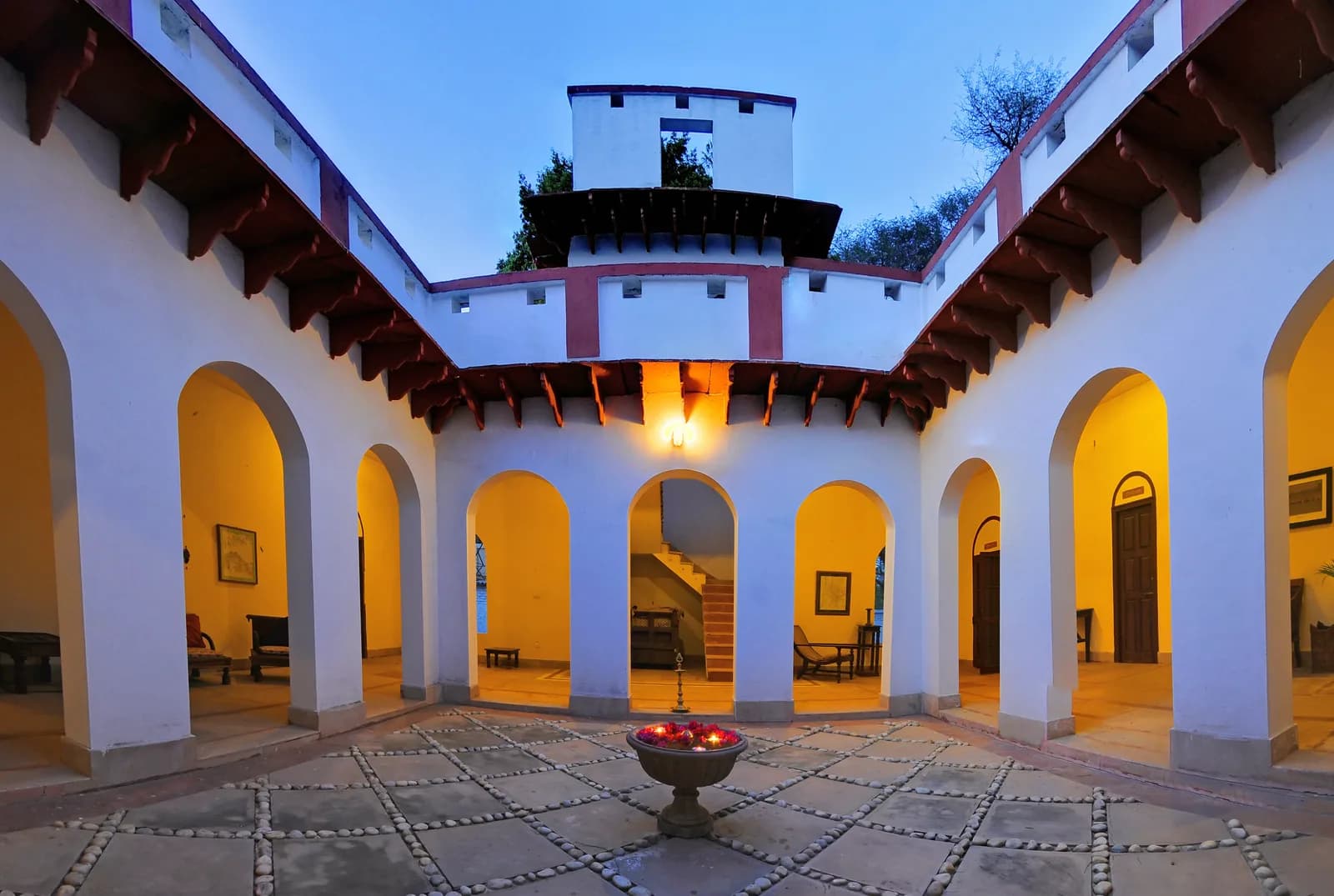
Set amidst the ravines and riverine landscapes of the Chambal region, Mela Kothi – Chambal Safari Lodge occupies a restored 19th-century family estate that has evolved into one of India’s most distinctive conservation-led retreats. Revived by Ram Pratap Singh and environmental scientist Anu Dhillon Singh, the property combines heritage restoration with ecological regeneration, transforming degraded farmland into thriving woodland over the course of two decades. With just fourteen individually designed rooms and cottages surrounded by mature trees and open countryside, the lodge retains the atmosphere of a private country home rather than a conventional safari property. Rooted in the landscapes, communities, and wildlife of Chambal, Mela Kothi offers an immersive introduction to a region where history, conservation, and rural life remain deeply intertwined.

Operational Period

Closed from 1st May to 30th September

From

INR 7,550 / Night

AC
AC
Bar
Bar
Credit Cards
Credit Cards
Inclusive
Inclusive
Parking
Parking
Naturalist
Naturalist
Pets
Pets
Restaurant
Restaurant

Your Stay at Mela Kothi - Chambal Safari Lodge, Jarar, Uttar Pradesh

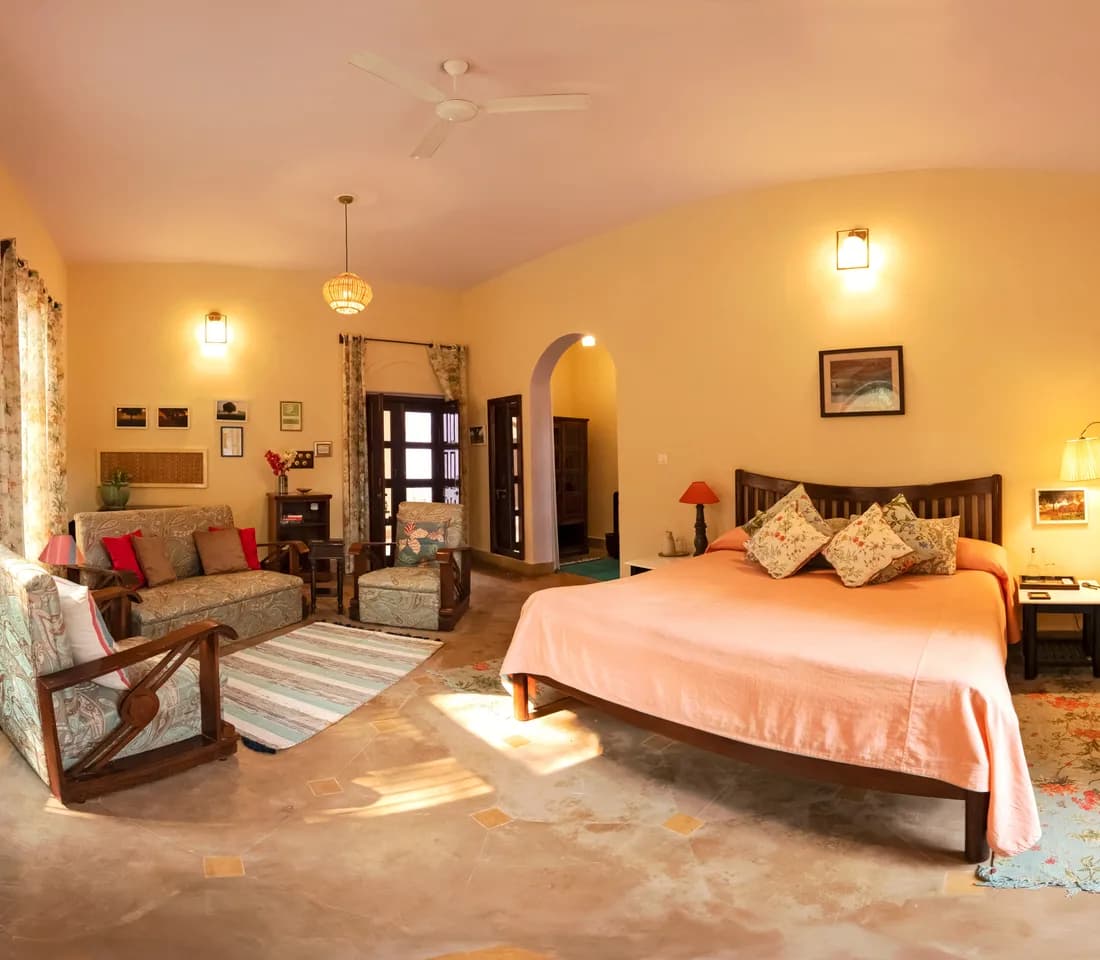
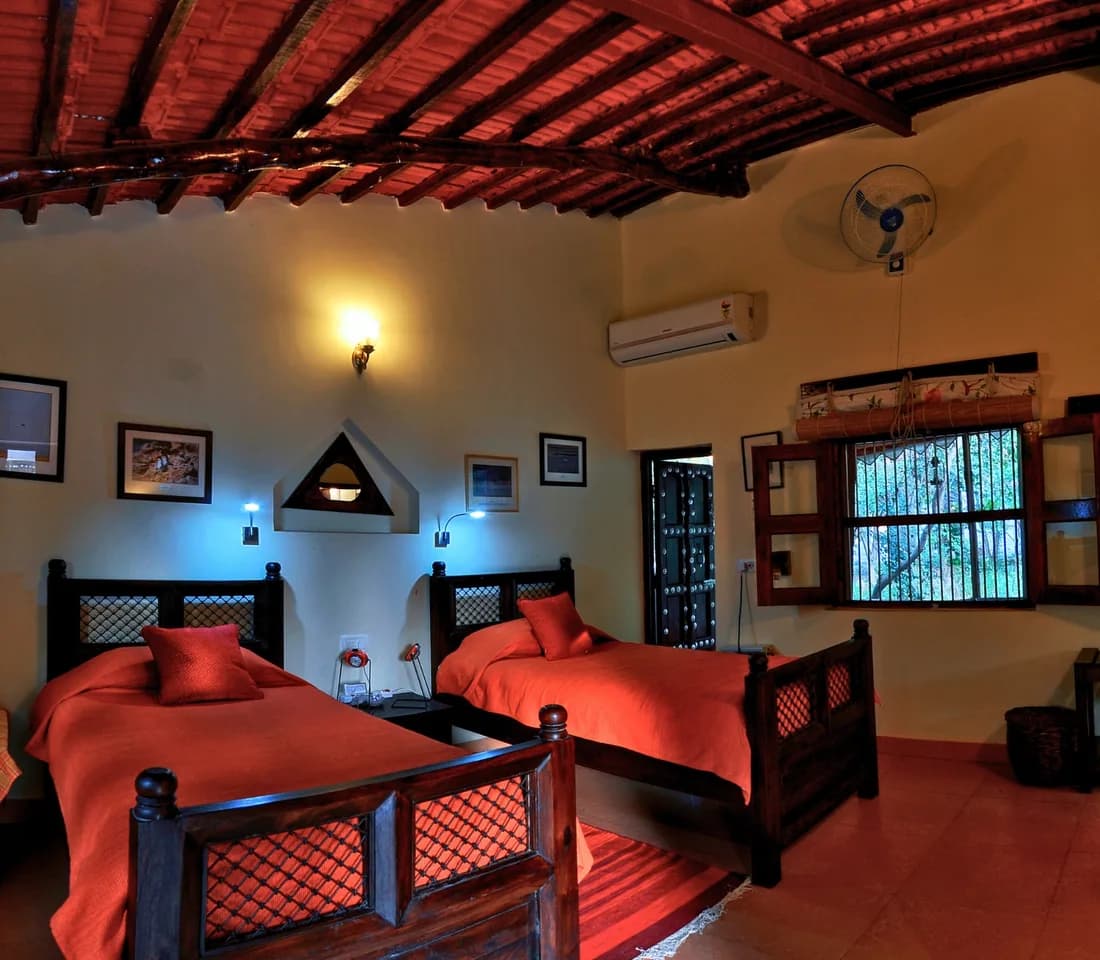
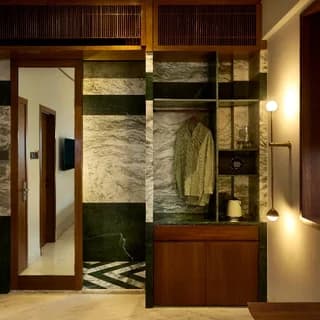
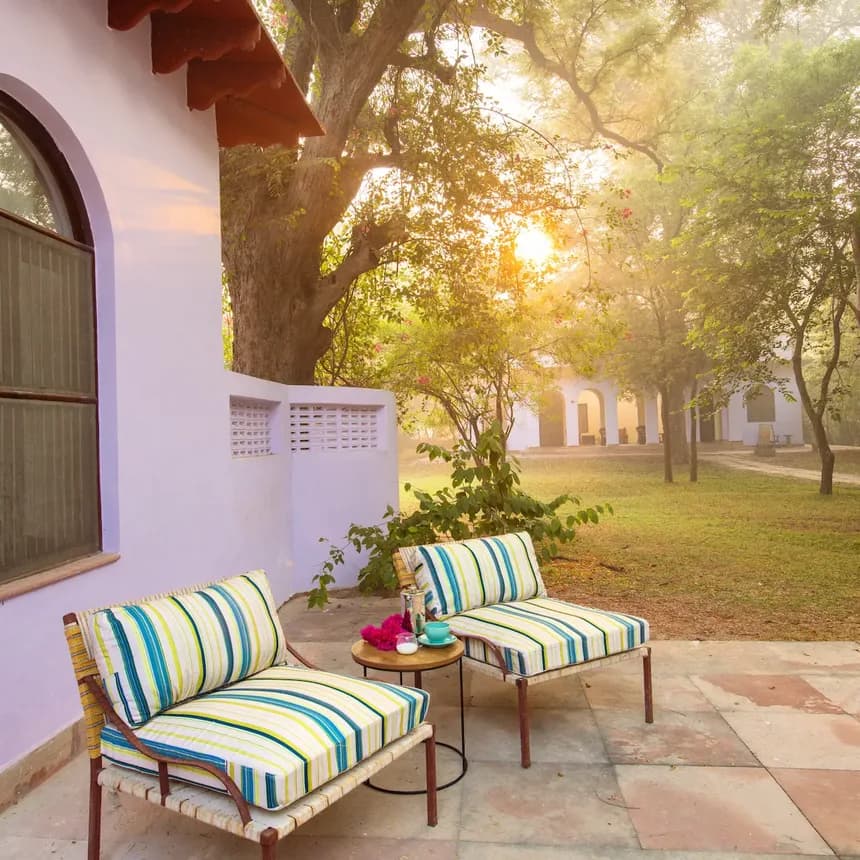
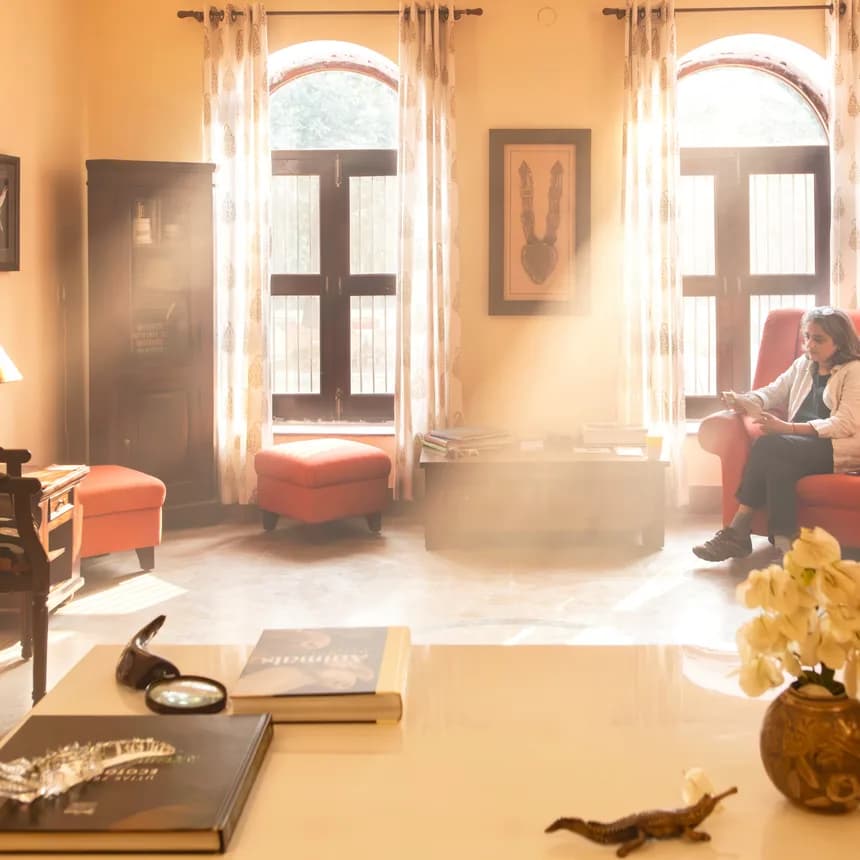
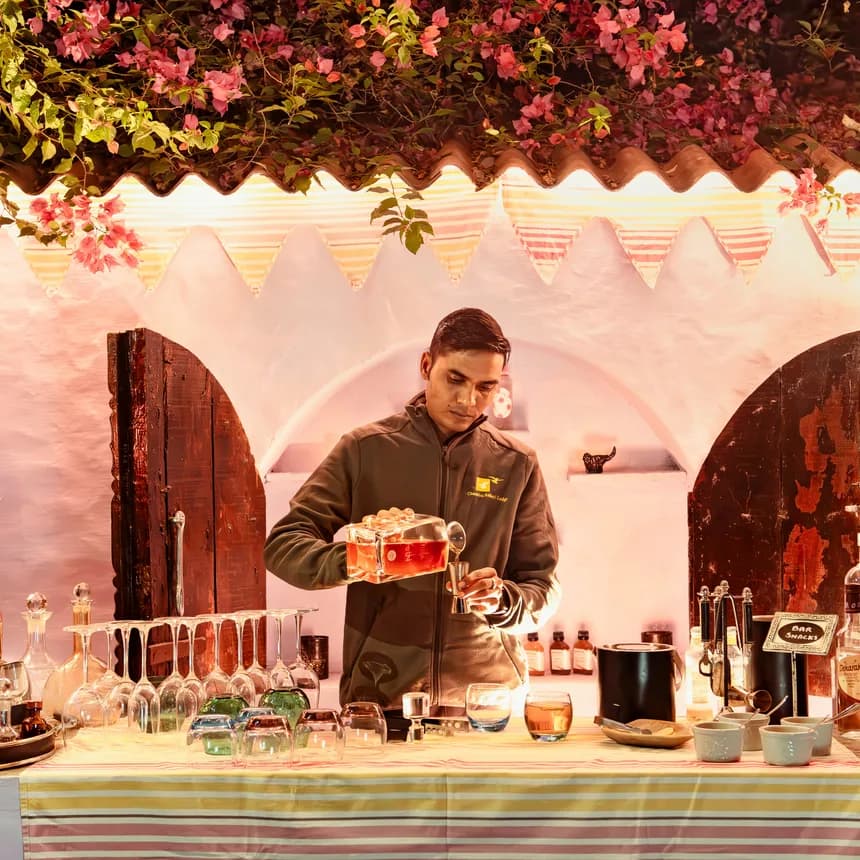
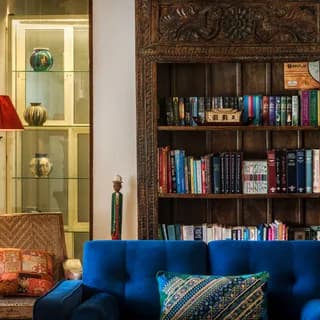
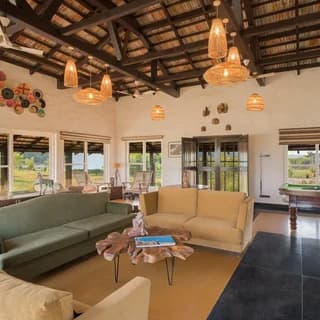
Fourteen rooms and cottages, none of them quite alike. That is the first thing to understand about staying at Mela Kothi. The property doesn't operate on the logic of standardised luxury - the reliable sameness of thread count and minibar that most hotels use as a proxy for quality.  Each space has been put together with a very particular personality. Colorful, individual, and cocooned by mature trees, they offer a kind of calm that careful interior design alone cannot create. Spacious enough to be comfortable, intimate enough to feel personal, they open onto wooded grounds where silence, shade, and space become the real luxuries. What makes the stay memorable is not one grand gesture, but the rhythm of the whole place: verandahs for slow tea, courtyards for conversation, a library to linger in, gardens that invite wandering, and dining spaces that make the lodge feel more like a generous country home.

Luxury Room

Luxury Room

INR 18,750/ NIGHT

Twin Bed

Twin Bed

INR 7,550/ NIGHT

RARE India

Perfectly RARE

Mela Kothi stands out by turning an old family estate into a deeply rooted Chambal experience. Set within regenerated forest, the lodge keeps its sense of place intact with just fourteen individual rooms and cottages, home-style hospitality and a strong conservation ethic. Local naturalists, river safaris, village walks and farm-led meals bring guests close to the river, ravines, wildlife and rural life, creating a natural blend of heritage, wilderness and stewardship.

Destination

Every river in India carries a divine biography. The Ganga descended from Shiva's matted locks. The Yamuna is Krishna's own. Chambal, however, carries a darker inheritance. In the Mahabharata, it appears as Carmanvati (the River of Hides), born from the heaps of animal skins left after King Rantideva’s sacrifices. Folklore deepens the shadow: it was on Chambal’s banks they say that Draupadi was lost in the infamous game of dice. Humiliated, she cursed the river for witnessing her dishonour - and from then on, anyone who drank its waters would thirst for vengeance.

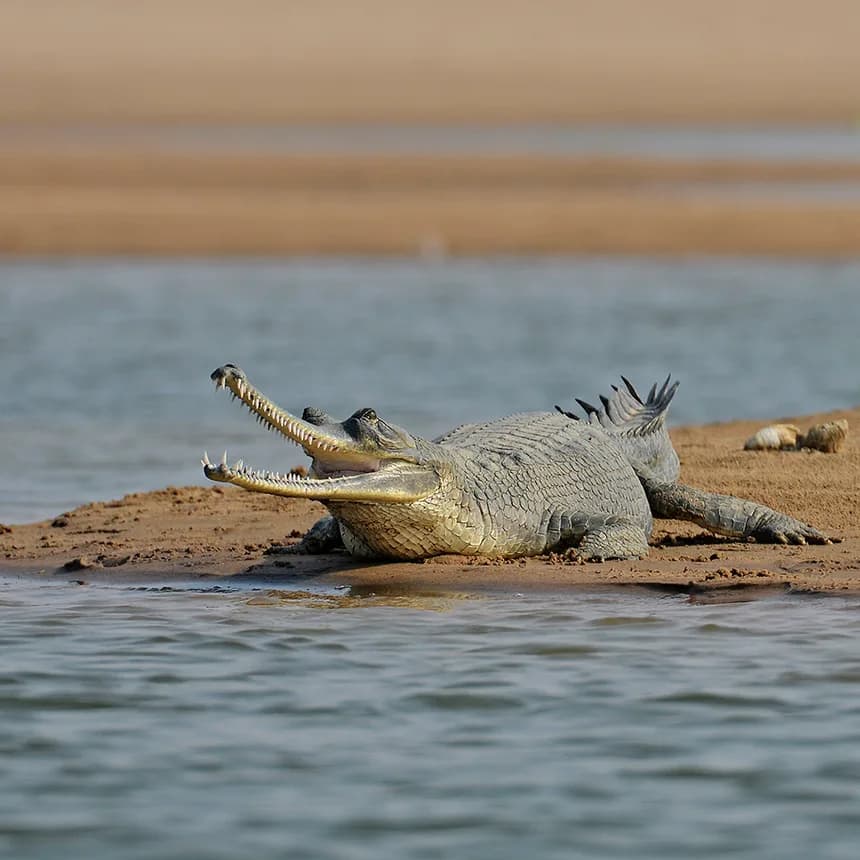
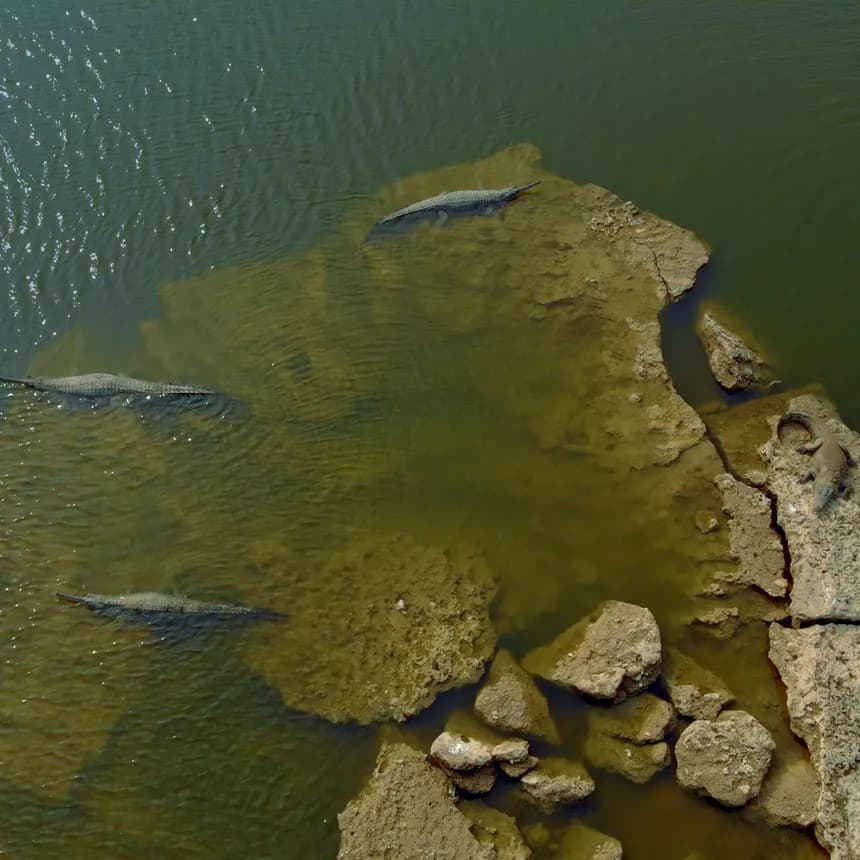
And so the Chambal ran free - through an ancient, eroded landscape of ravines and badlands that the rest of India agreed to forget. What that forgetting produced is one of the last pristine river systems on the subcontinent, a sanctuary that shelters many critically endangered species, including Gharials, Gangetic River Dolphins, Marsh Crocodiles, and over 330 species of birds. The unholy river, it turns out, is the cleanest one left.

Roughly an hour from the Taj Mahal, Mela Kothi - Chambal Safari Lodge sits near Jarar in Uttar Pradesh, but spiritually it feels much farther away from the usual circuits of Agra. This is not a safari in the loud, pursuit-driven sense. It is a slower journey through one of India’s most distinctive landscapes: deep ravines, dry scrub forests, farming villages, medieval shrines, and the protected waters of the National Chambal Sanctuary.

Mela Kothi
Mela Kothi

Design & Concept

There's a particular kind of intelligence in restoring something to what it once was, rather than replacing it with something new. Ram Pratap Singh could have built anything on his family's ancestral land. What he and his environmental scientist wife Anu chose to do instead was slower, harder, and infinitely more interesting.

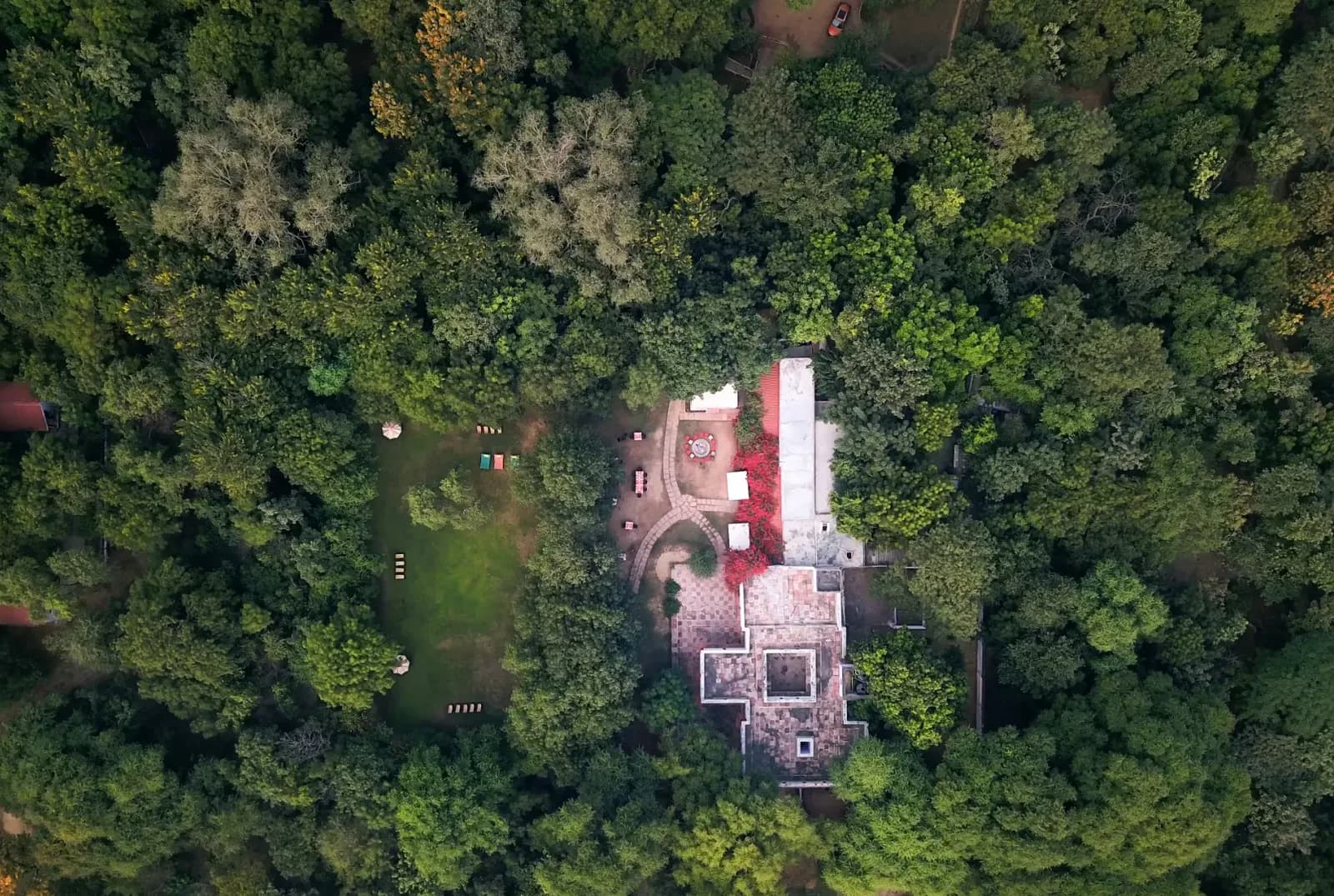
The Mela Kothi built in the late 1860s by Rai Saheb Ch. Suraj Pal Singh as a camp office for the family's legendary biannual cattle fair had fallen into disrepair by the 1990s. In 1999, Ram Pratap began the work of bringing it back - not as a period piece or a nostalgic reconstruction, but as a living, breathing lodge rooted in the land it stands on. Over two decades, he has cultivated 33 acres of woodland from what was largely degraded farmland, planted with an eye toward restoring the native ecological fabric of the Chambal hinterland.

Know Your Host

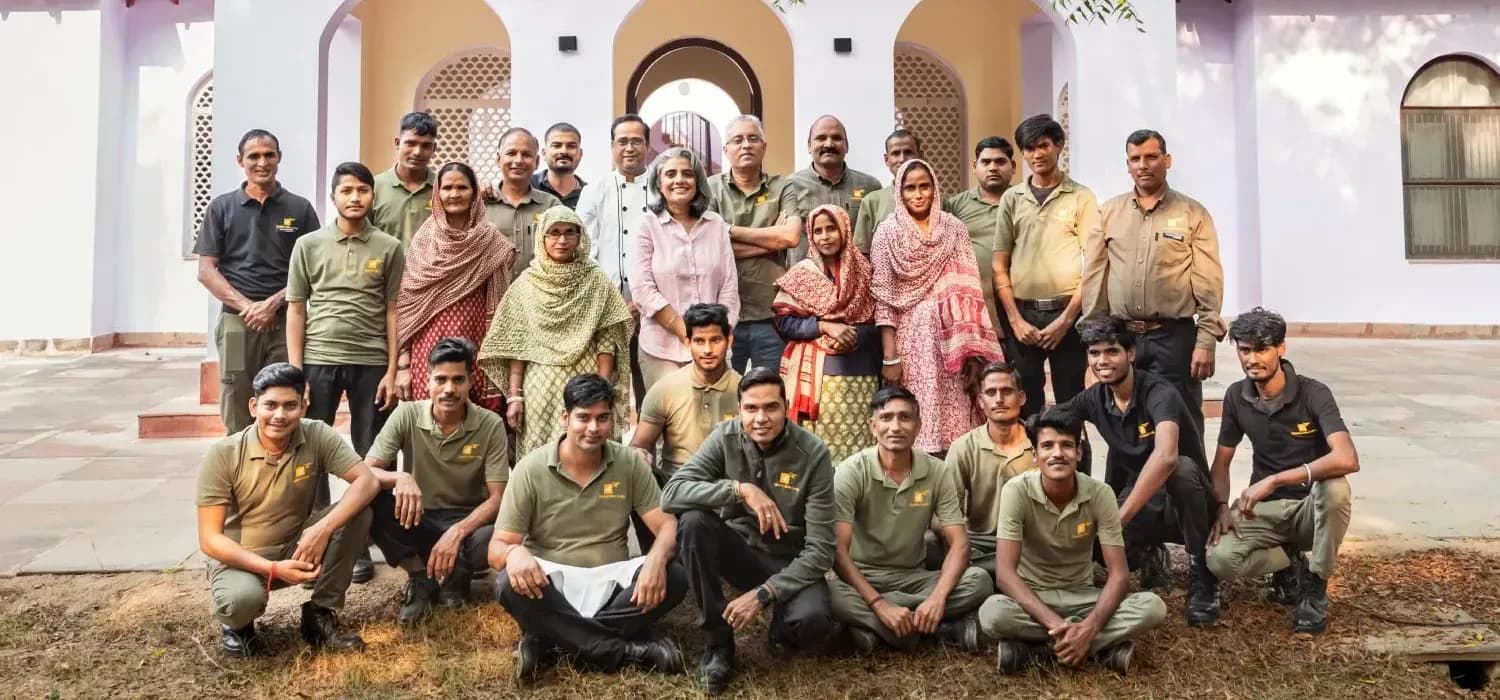
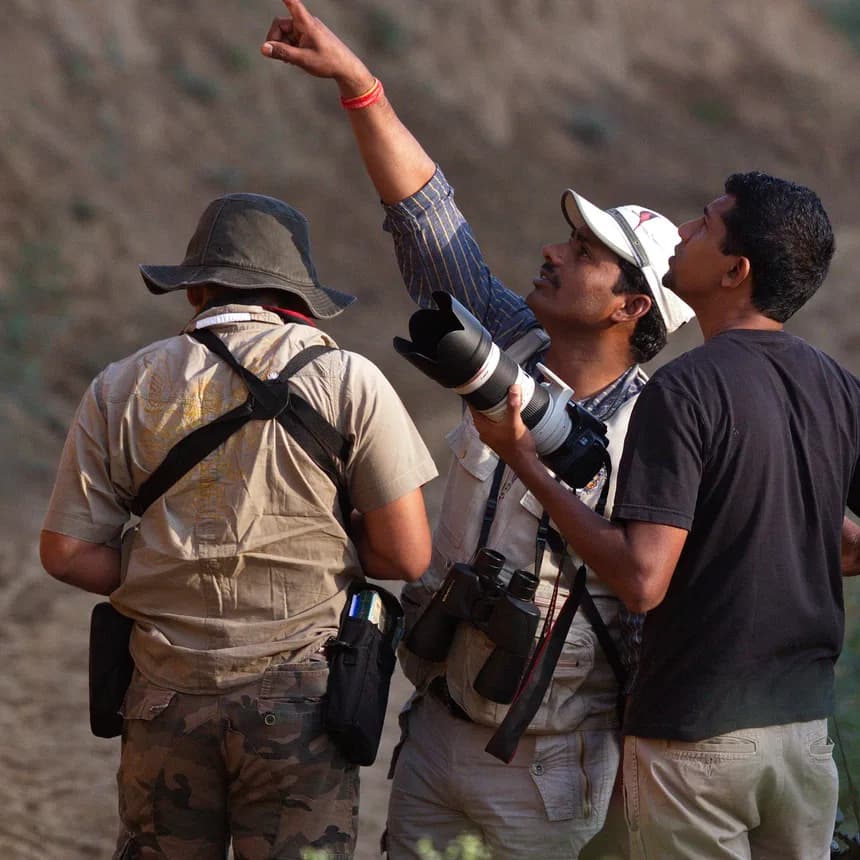
IIT engineer Ram Pratap Singh and environmental scientist Anu Dhillon Singh are the heart of Mela Kothi, giving the lodge its intimate, lived-in, family-home character. The couple moved to the property while it was still derelict, raised their young family here, rebuilt the house and cottages over the years, and shaped the guest experience around the Chambal they know intimately. Anu spends a few weeks in London during the summer off-season, but Mela Kothi remains her permanent home and winter base. The team too comes largely from Chambal and its surrounding villages, giving the experience its authenticity. So guiding here is not just about naming birds or pointing out a crocodile on a sandbank, but seeing and understanding the land through people who know its villages, seasons, river moods and small silences.

Mela Kothi Host
Mela Kothi

Facilities

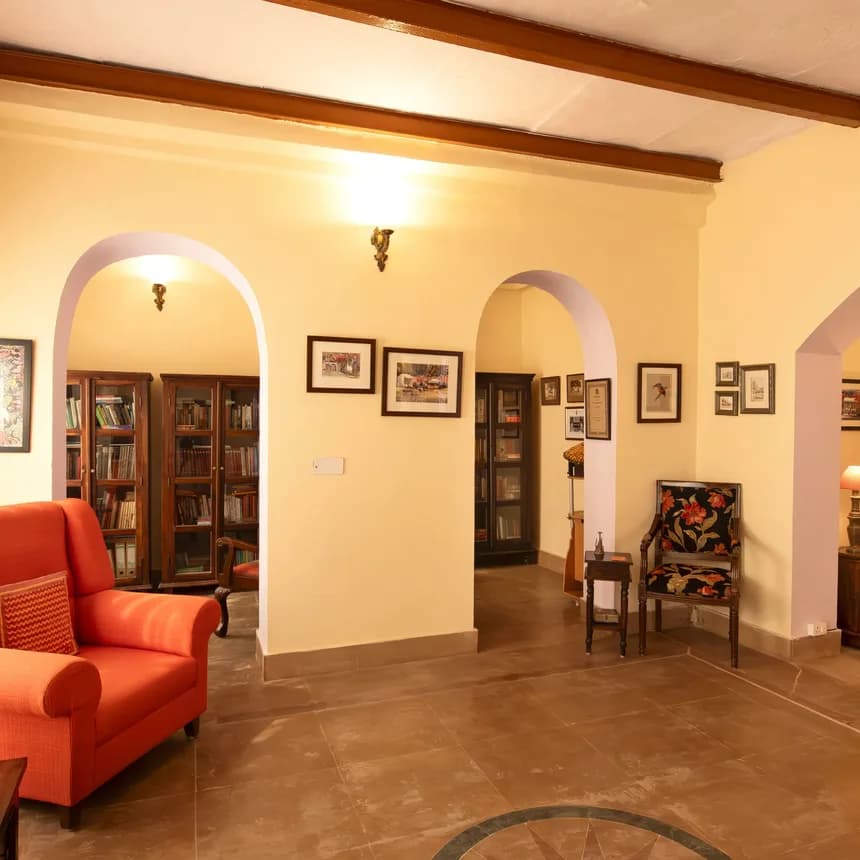
Mela Kothi’s comforts are thoughtful rather than excessive. There is a library and sitting room, resident naturalists for guided rambles, complimentary though sometimes erratic Wi-Fi in the lounge and garden areas, independent air-conditioning in rooms and cottages, oil-fin radiators and hot-water bottles in colder months, and safe drinking water purified through RO and UV systems and served in glass and steel bottles.

Dining

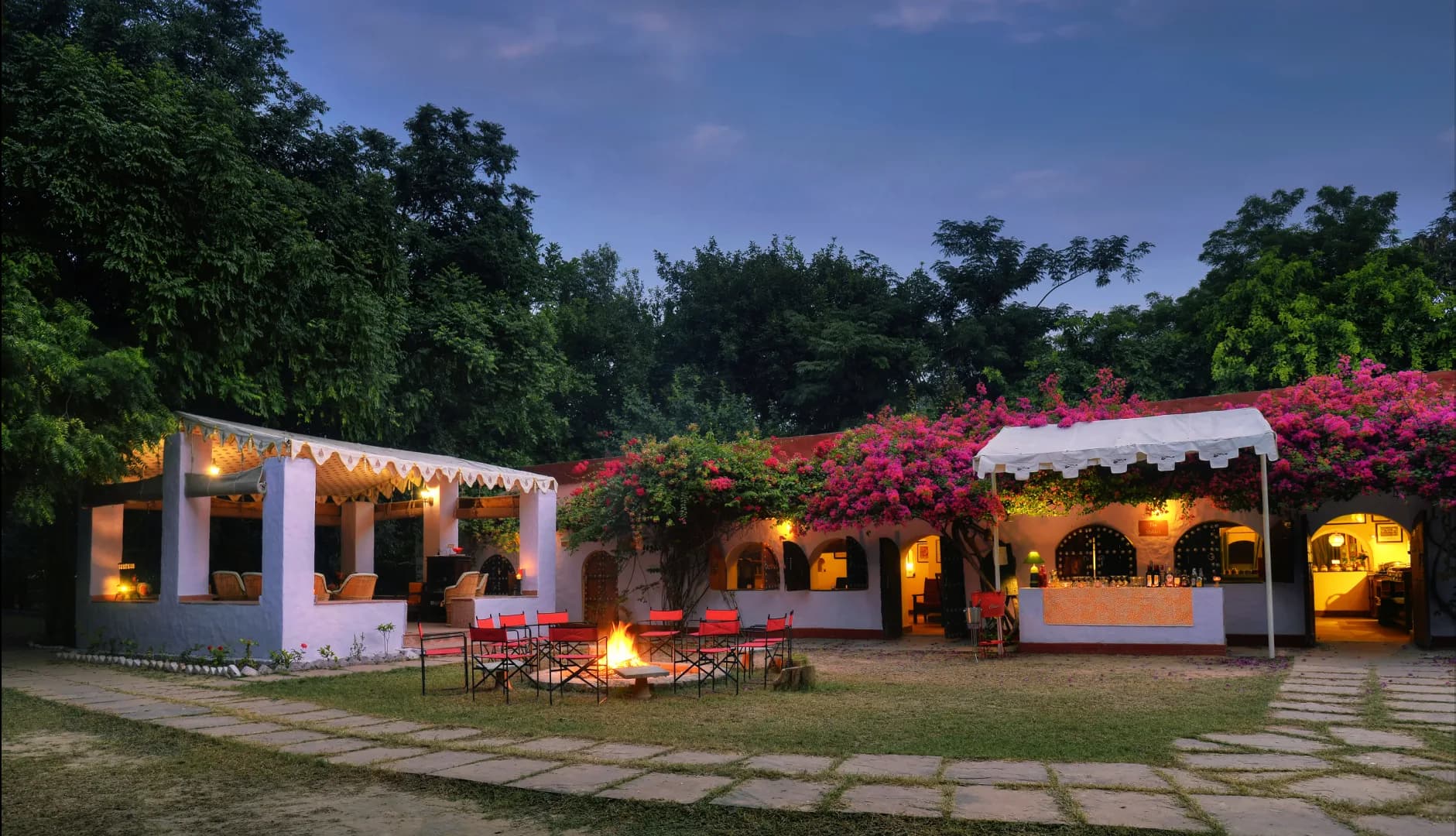
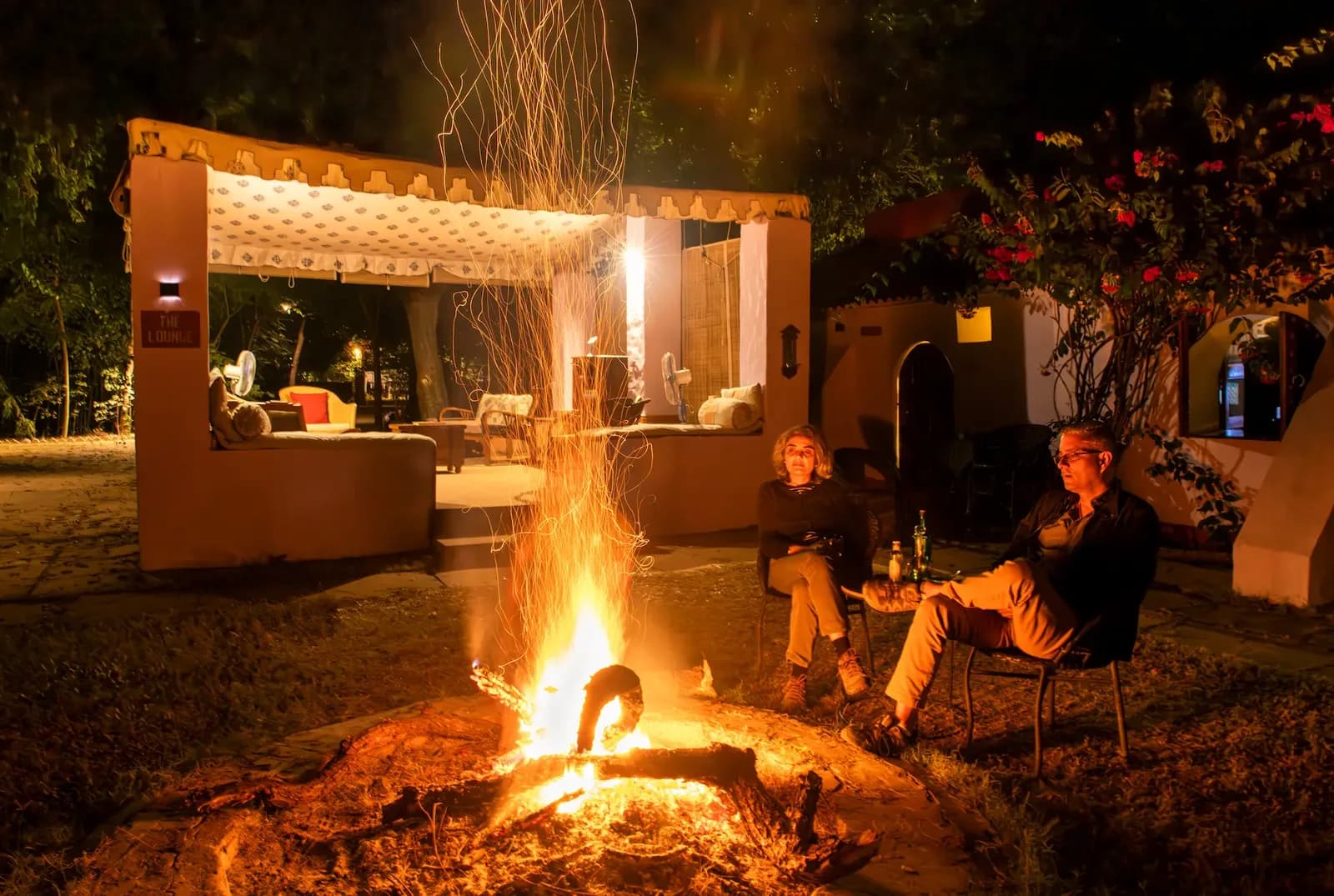
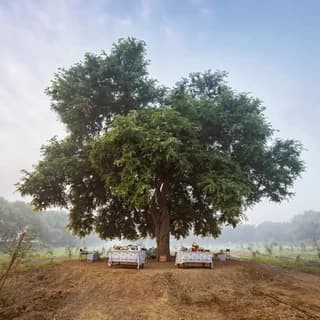
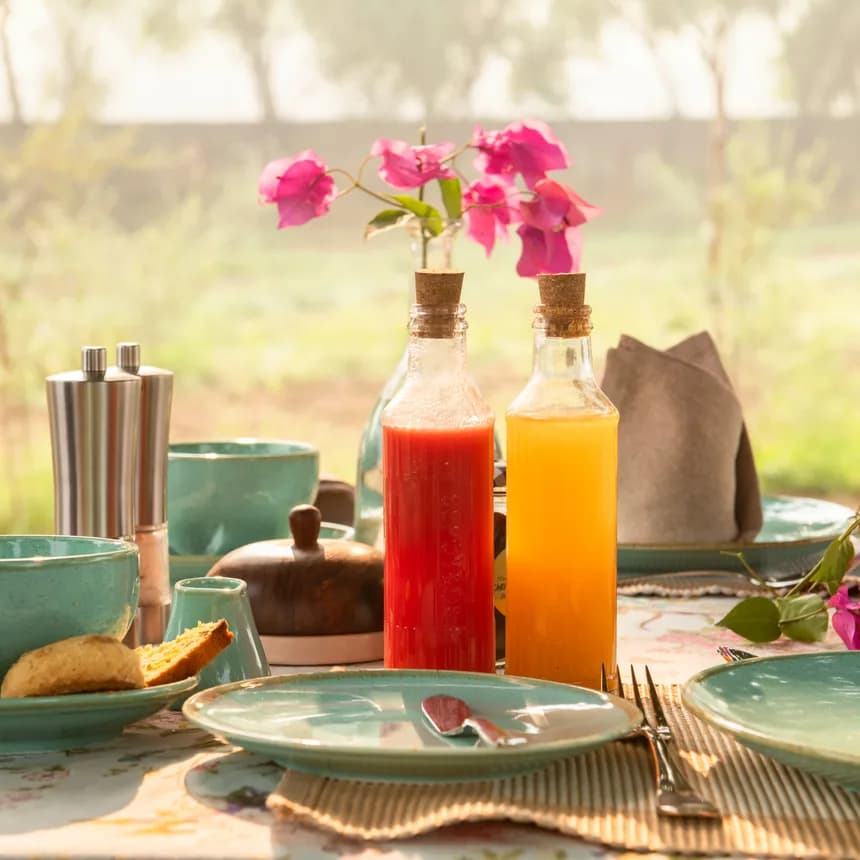
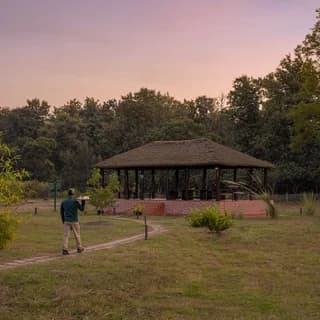
Mela Kothi’s dining has the ease of a family table and the memory of an old household. Its culinary tradition goes back to a time when younger members of the family would compete over their own versions of inherited recipes, adding a little mischief, pride and personality to dishes that are still served today. Menus are curated each morning around what is available in the local farmers’ market, with local specialties alongside contemporary Indian and Continental dishes. The setting does half the work - old trees across expansive gardens or near the restored 18th-century stable block. By evening, bonfires naturally gather guests, conversations flow easily, and the Chambal sky opens up for stargazing.

Mela Kothi
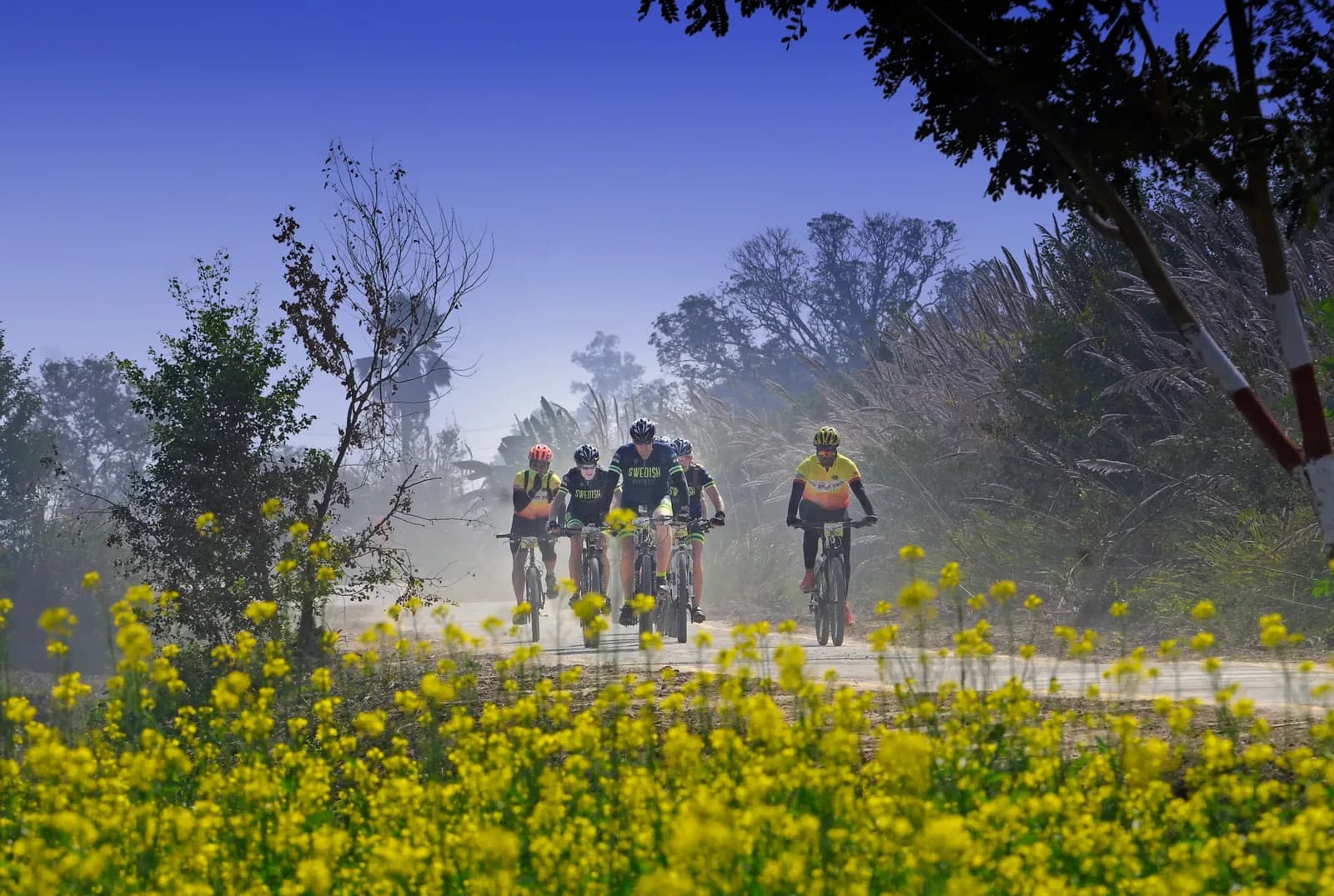
Bicycling

Experiences

Mela Kothi’s experiences are shaped by three defining landscapes of Chambal: the river, the ravines, and the rural world that lies between them.

The river safari is the essential Chambal experience. The National Chambal Sanctuary protects a 400 km stretch of the river, with ravines running along both banks. Declared a protected area in 1979 to revive the gharial population, it is now one of the last habitats of the Gangetic River Dolphin. Its waters and sandbanks shelter gharials, marsh crocodiles, eight species of turtles, smooth-coated otters and more than 330 species of resident and migratory birds, including the Indian Skimmer. With Mela Kothi’s naturalists on board, the safari is  a way to understand the fragile river ecosystem and the conservation story that has helped protect it.  

The Blackbuck Jeep Safari heads southwest from the lodge towards the Chambal ravines, passing through fields and remote hamlets in search of blackbuck and dryland birds such as the Indian Courser. It takes around three to four hours. The Sarus Crane Jeep Safari is more specialised and is a 4 to 5 hour outing into wetland and cultivated areas north of the Yamuna, recommended especially for serious birders. 

The lodge grounds themselves are quietly alive, with over 198 species of birds and small mammals recorded in and around Mela Kothi. Early morning and late afternoon walks with the naturalists are a soft introduction to the countryside, but the night walk is where the mood changes - palm civets, jungle cats, jackals, foxes, hares, fruit bats, hedgehogs and, if fortune allows, the Indian striped hyena.

The cultural experiences at Mela Kothi are rooted in the villages, farms, temples and craft traditions around the lodge. Village walks introduce you to everyday rural life, while visits to Bijkouli’s potters, Holipura’s old havelis and nearby farming settlements show the continuity of local skills and community life. Bateshwar brings in the spiritual and architectural side of the region, with its Shiva temples, ghats, evening aarti and annual fair. Shouripur’s Jain temples, Rapri’s old Islamic monuments, Etawah’s colonial history and cycling routes through the countryside add further depth to Chambal’s layered story.


Cycling
CYCLING
Birding
BIRDING
Boating
BOATING
Community
COMMUNITY
Cultural Tour
CULTURAL TOUR
Heritage Walk
HERITAGE WALK
Indoor Games
INDOOR GAMES
Safari
SAFARI
Village Walk
VILLAGE WALK
Yoga
YOGA

Explore Around

Bateshwar Temples

The most poetic excursion from Mela Kothi. More than 40 white Shiva temples line the Yamuna, and the evening aarti gives the place a luminous, lived-in sanctity.

Fort Ater

A rugged, ravine-side fort with Rajput, Maratha and British associations. Part ruin, part vantage point, part reminder that Chambal’s history was never tame.

Bhareh

For the more committed explorer, Bhareh lies at the confluence of the Chambal and Yamuna, reached through wild ravine country. It is a longer 6 to 7 hour excursion with a packed lunch, but it offers one of the region’s most dramatic landscape stories.

Sustainable Tourism

Heritage Preservation

READ MORE
Read more

Light Footprint Tourism

READ MORE
Read more

Biodiversity Conservation

READ MORE
Read more

Join the circle

Join RARE circle for exclusive rewards and privileges at our stunning properties

Become a Member
The Times of India
Architectural Digest
Vogue
Lonely Planet
Travel+Leisure
Condé Nast Traveler
Forbes
The Telegraph
gINKgo

EXCLUSIVE Travel insights and special offers. no spam, just RARITY.

7 Doors HouseThe Rohet House, JodhpurCamp TigerLily, Dudhwa TRTiger Mountain Pokhara LodgeKayal Island Retreat7 Doors House