


gINKgo I The RARE Collection Newsletter I RARE Monsoon Escapes VOL 127 | September 2026


Dear Travellers,
The monsoon is still active in some places, and that annual debate continues: whether the rain is romantic, inconvenient, badly timed, or simply not enough. I belong, predictably, to the first school of thought. Some of my best moments have been in the hills of the Western Ghats, in our forest home in Bandhavgarh, and on many occasions I have been happily, deliberately unprepared to be drenched in the deluge. That does not mean that being safely indoors with a cup of tea and calling for pakoras, or fritters, is not welcome. That too! Rains are one of Nature’s most heartfelt regenerative spectacles. Every region’s glow after the rain is special.
This is also a moment to remember that travel is not only about where we go, but about what our going there can mean. We are deeply saddened by the loss of lives and property in parts of Nepal. Our hearts are with everyone affected. But Nepal, like every living destination, is larger than the places that have been hit by calamity. Much of the country remains open, and its tourism communities need travellers now more than ever. If tourism can do good, this is precisely the moment when it can — by keeping livelihoods moving, supporting local businesses and reminding the world that Nepal remains open to those who wish to travel responsibly. Book your trips now, and don’t cancel. If tourism can do good, it is by empowering and supporting Nepal through travel.
At RARE, we have always believed the monsoon deserves its place on the travel calendar. This is when the land softens, rivers gather force, forests turn theatrical, and old palaces, village homes and wilderness lodges seem to exhale. Travel becomes less about rushing between landmarks, and more about noticing wet earth, birdsong after rain, polished stone courtyards and the rare pleasure of doing very little. Perhaps that is also why BRIDGES For Conscious Travel 2026 is designed around August and September: to look at the subcontinent not only in its familiar, postcard-perfect seasons, but in the moments when its landscapes are most alive.
This is the season to choose wisely: smaller places, longer stays, slower roads and destinations that wear the rain beautifully.
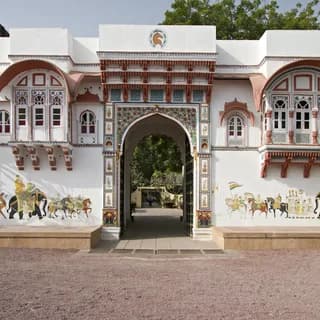
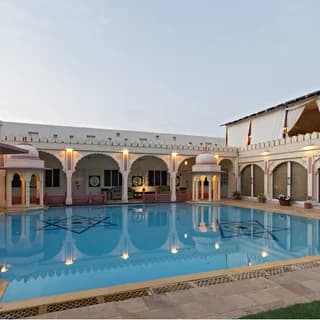
Rajasthan, contrary to popular belief, is magnificent in the monsoon. At Ramathra Fort, Shahpura Bagh, and Chanoud Garh, the season brings lakes, clouds, peacocks, green fields and an unexpected softness. In the Western Ghats and Kerala, Pepper Trail, Windermere Estate and River House, and Cranganor History Café & Riverside Château come alive with plantation walks, river views, rain-washed gardens, generous food and, for the curious, naturalists out herping for frogs, toads and snakes.
Our Monsoon Escapes are for travellers who enjoy weather, understand that a cloudy sky can be as beautiful as a blue one, and know that some of the best journeys begin when the world slows down.
So this year, perhaps don’t escape the rain. Travel with it.
Editorial Team @ RARE

When Rajasthan Turns Green
MONSOONS BEYOND DESERT CLICHÉ
Rajasthan in the monsoon is one of travel’s better-kept secrets, perhaps because we have spent too long selling it in gold. Gold forts, gold sand, gold light, gold everything. Then the rains arrive and, almost mischievously, Rajasthan changes the subject.
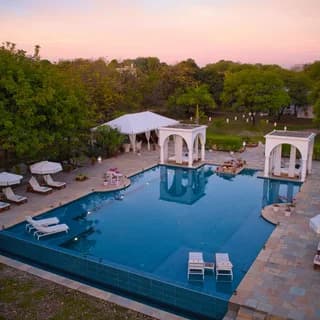
At Ramathra Fort, lakes fill and the countryside becomes lyrical. At Shahpura Bagh, the monsoon settles over gardens, water bodies and old-world hospitality with the ease of a long-awaited guest. Chanoud Garh turns softer, more intimate, more village-bound, its palace rhythms deepened by wet earth, local stories and the unhurried grace of rural Marwar.

When the Rann Softens
There is a particular kind of beauty in Gujarat when the season turns. The land does not suddenly become lush in the manner of Kerala, nor does it surrender dramatically like the hills. It softens by degrees. The dust settles, the salt flats hold the light differently, village paths darken after rain, and the craft communities of Kutch and Dasada seem even more vivid against a quieter landscape.
Perfect the art of staying still
AT BARI KOTHI
Murshidabad is not in a hurry to be understood. This is perhaps why it remains so rewarding. It asks for patience, for a slower eye, for an interest in river towns, forgotten capitals, silk routes, old wealth, fading facades and the beautiful melancholy of places that once stood at the centre of the world.
At Bari Kothi, the monsoon feels almost cinematic, though thankfully not in the loud way. The river moves with greater purpose. The old mansion deepens in colour. Courtyards glisten. Stories travel through corridors. Bengal’s particular genius for memory, music, textiles, food and conversation seems to find its natural weather in the rain.
The Rain Remembers Muziris
Kerala in the monsoon is hardly a secret, but there are still ways to experience it without joining the parade. The trick is to follow water, history and houses rather than the obvious itinerary.
Around Muziris, at Cranganor History Café & Riverside Château, the rain feels like an archivist. It brings back the scent of riverbanks, spice, wet earth, old trade and half-remembered journeys. This is a landscape shaped by merchants, missionaries, synagogues, churches, temples, boats and kitchens, where culture has always arrived by water and stayed long enough to become local.
The Palace, the Paintbox and the Rain
MONSOON, HANDMADE
Some places carry culture quietly, in hand-painted cards, old courtyards, family rooms, lacquered details, monsoon gardens and the scent of rain on wood. Sawantwadi Palace is one of them.
This is a story for travellers who understand that luxury can be small, handmade and astonishingly personal. Sawantwadi’s great gift is not scale, but continuity. The palace carries the quiet glamour of a royal household, but its deeper charm lies in its living traditions: Ganjifa art, lacquer craft, hand-painted detail, heirloom hospitality and the kind of conversations that are almost impossible to stage.