

Ramathra Fort: A Myth and a Rewilding Story
Some places in Rajasthan seem built for the postcard: polished ramparts, obedient sunsets, a peacock appearing at the precise moral hour. Ramathra Fort is not one of those places. It is more interesting than that. It sits in eastern Rajasthan with the air of a fort that has stopped trying to impress the world and has, instead, resumed a conversation with the land around it.
The story begins, as many fine Indian stories do, with a god on a journey. Local legend holds that Lord Rama rested here on his way to Lanka, giving Ramathra its name and lending the landscape that particular charge found in places where myth and geography have been allowed to live together without apology. This is not mythology as museum text. It is mythology as atmosphere. It lingers in the way people point to a ridge, speak of a shrine, walk a village path, or accept that a place may have more than one kind of truth.
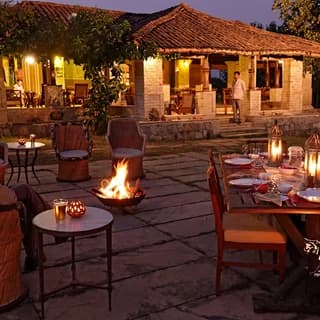
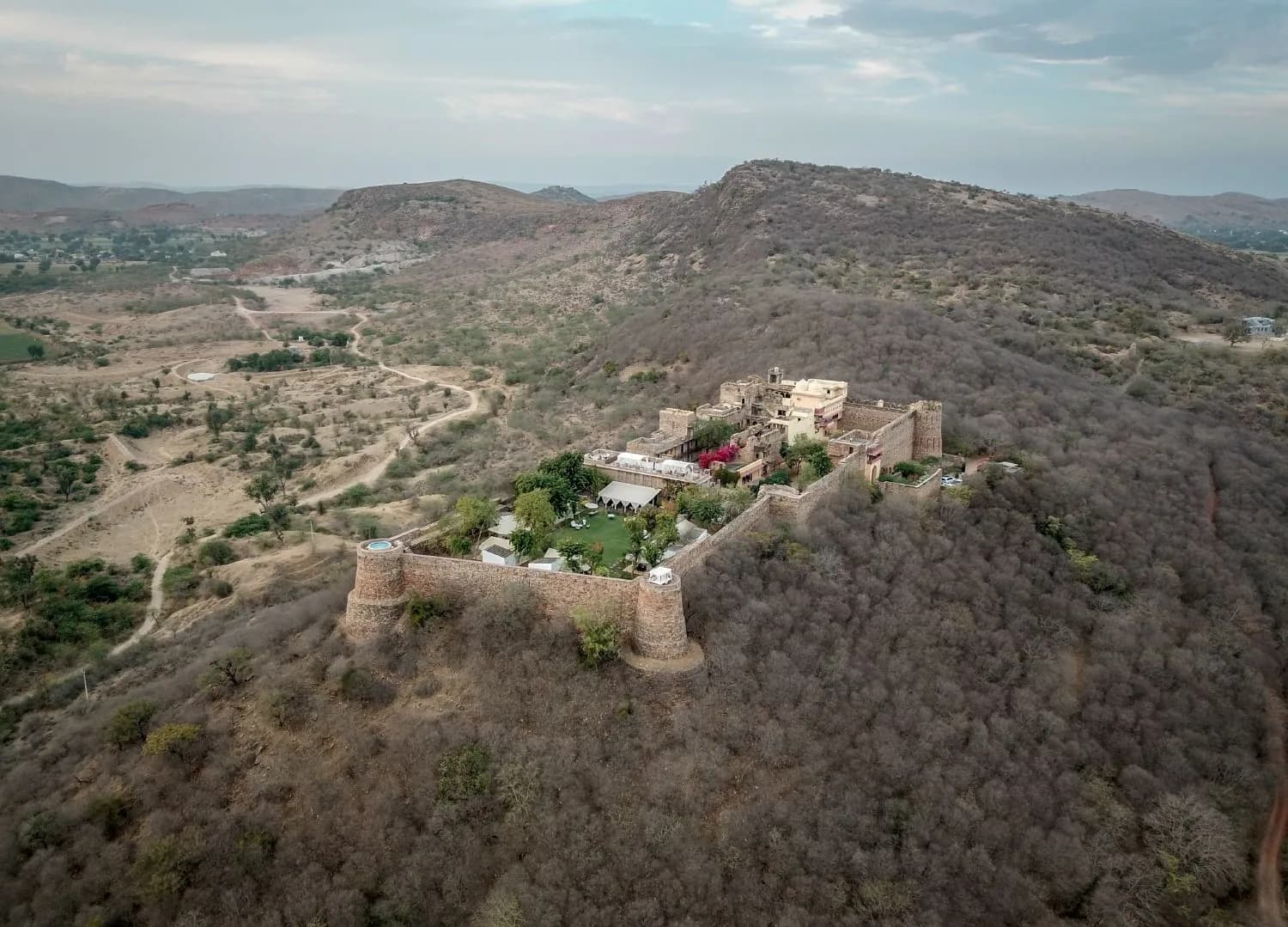
Then comes history, sterner but no less compelling. Ramathra was established as a Karauli fiefdom in the 17th century, and the fort has remained tied to descendants of that lineage. Its restoration into a small heritage retreat has not turned it into a decorative relic. The better word is perhaps resumed. A fort once built for watchfulness now watches over a landscape that is quietly recovering its own authority.
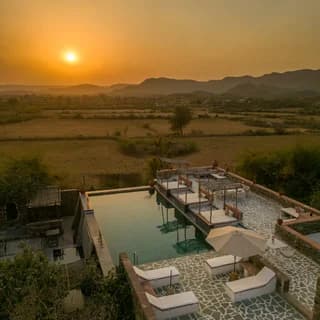
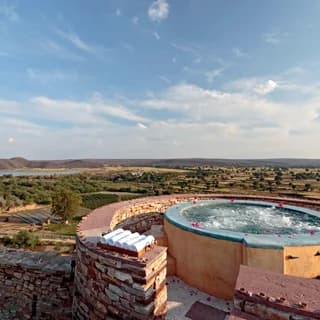
From its hilltop, Ramathra looks down upon Kalisil Lake, farmland, scrub, ravines, village hamlets and the broken, beautiful country of the Daang. The landscape is not grand in the theatrical way of Udaipur, nor monumental in the manner of Jodhpur. Its beauty is more oblique. It asks for time. The lake was formed when the Kalisil River was dammed for irrigation, bringing water to Ramathra and neighbouring villages; in the monsoon, when full, it stretches towards Kailadevi. What could have been merely useful has become ecological theatre: water birds, kingfishers, herons, stilts, sarus cranes, cormorants and winter visitors finding in its edges a reason to return.
Yet the more profound story at Ramathra is not the fort, nor even the lake. It is the land’s slow correction.
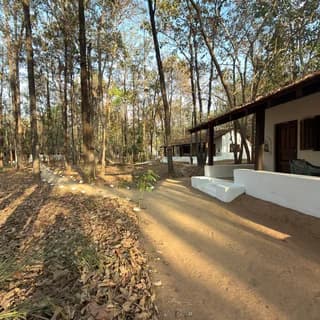
This is where the idea of rewilding enters, not as a fashionable word borrowed from conservation conferences, but as a patience practised over years. Around Ramathra, the wild is not a sealed-off spectacle. It is interleaved with farms, temples, grazing routes, village life, scrub forest and the old animal knowledge of people who have lived long beside it. To rewild such a place is not to erase the human presence, but to reconsider its terms. It is to let the ravine grow thick again. To allow birds to trust the water. To notice the return of small carnivores at night. To protect the unglamorous species as much as the charismatic ones. To understand that an ecosystem is never rebuilt only for the camera.
Ramathra’s nearness to Kailadevi Wildlife Sanctuary gives this effort a wider ecological resonance. Kailadevi forms the northern extension of the Ranthambore Tiger Reserve landscape, a rugged zone of dry deciduous forest, gorges, rivers and corridors. In such a geography, every patch of restored habitat matters. The tiger may be the emblem, but it is not the whole sentence. A landscape becomes viable through prey, cover, water, insects, grasses, trees, birds, reptiles, cattle practices, village tolerance, and the long, often invisible diplomacy between people and wild animals.
At Ramathra, the night safari is less about conquest than listening. The darkness restores proportion. Owls return the gaze. Foxes, civets, porcupines and smaller creatures remind the visitor that wilderness is rarely announced by a roar. It is usually a rustle, a pause, a pair of eyes low to the ground. The great correction of a place like Ramathra is that it teaches scale. The fort may be old, the myth older, but the living landscape is older still.
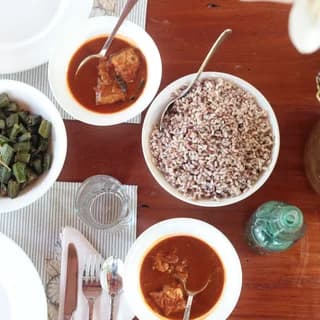
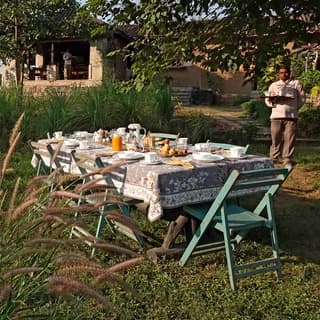
There is also another kind of conservation here, quieter but essential: the conservation of rural intelligence. The village walk is not an accessory to the stay. It is part of the grammar of the place. Ramathra’s surrounding hamlets, fields, shrines and paths carry the everyday knowledge of crops, animals, seasons, festivals and faith. The hospitality is strongest when it does not remove the guest from this world, but brings them into it with tact. A temple under family care. A meal shaped by farm produce and inherited recipes. A conversation with someone who knows why a bird arrives when it does. A trail that begins as leisure and becomes instruction.
This is why Ramathra Fort feels unusually alive among Rajasthan’s heritage hotels. It is not content to be admired as architecture. It insists on being understood as habitat, inheritance and responsibility. Its best luxury is not opulence, but orientation. It tells the traveller where they are: between myth and river, fort and field, village and ravine, memory and renewal.
In the end, Ramathra’s rewilding story is not about returning the land to some imagined purity. That would be too simple, and not very Indian. Its story is subtler. It is about restoring relationship. Between a fort and its countryside. Between hospitality and habitat. Between the traveller’s desire for beauty and the landscape’s need for care. Between a mythic past and a living future.
The legend says Rama passed through Ramathra on his way to Lanka. Perhaps that is the point. The most meaningful places are often not destinations in the ordinary sense. They are crossings. A pause in a larger journey. A place where the traveller, if attentive, may leave less certain of the difference between history and story, comfort and wilderness, seeing and belonging.
Ramathra Fort is one such crossing. A myth, yes. But also a landscape learning to breathe again.