

gINKgo I The RARE Newsletter I Heritage Revival and Tourism I Vol 117 I January 2026


Dear Travellers...
January was a month of opportunities and decisions. I travelled from the picture-book villages of central India featuring mud plaster homes and tiled roofs of people gently bound to the earth towards Bundelkhand in UP, once notorious for stories of brigands on its fertile plains, rivers and ravines. While heritage buildings seem to have lost their fight for survival or remain derelict along main streets, extraordinary mud forts stand guard, weather beaten but proud. Their survival subject to laborious restorations that would require huge funds and time to preserve this heritage.
Heritage Preservation is one of RARE's most priced Touchstones. It represents continuity, survival of architecture and all associated craft and arts of the region. A unique feature of Indian Hospitality and possibly the world's largest repository of both built and intangible heritage, India's forts, palaces and havelis have created some of the most poignant and stunning stay experiences for Tourism. While the large forts and massive palace hotels under corporate governance have had a new life, towering over the luxury space with awe-inspiring decor and decadent service; it is the smaller and often unknown forts and palaces by individual owners which have built value, preserving both culture and character of the building and the destination.
Lekha Poddar's elegant restoration of Devigarh, a stunning fort on a hill near Udaipur and the modern restoration of a Haveli in Jodhpur's old city reset heritage restoration for tourism towards a minimalistic, art and nature inspired design. Both now rightly under RAAS - an experiential luxury group that has grown its portfolio of boutique luxury hotels with the owner vision still intact - to transform historic sites in India into sustainable, design forward hotels.
RARE continues to celebrate centuries old Heritage through small forts, palaces and old homes, now heritage hotels that often stand as living museums that not only showcase built architecture but crafts as furniture, building techniques, textiles and cultural revival through preforming arts, festivals and cuisines. Even as you read this, a small intimate festival The Chhau is being held at The Belgadia Palace in Mayurbhanj, Odisha.
When you review your reasons for travel and stay, remember choosing Heritage hotels helps revive and sustain architecture, craft and culture.
Shoba Rudra
Story teller & Boutique Hotels OG

Under family stewardship since 1828, Chapslee in Shimla remains a lived private residence, with original rooms, silver dining sets, Gobelin tapestries, and personal collections still in use. Anglo-Indian household meals are served through traditional silver service, with dining protocols and table conversation reflecting the bygone era.

In Shekhawati's dense lanes, hand-painted frescoes in natural pigments remain vivid at Legacy Mandawa, a late-18th-century merchant haveli scaled around intimate courtyards rather than palace form. Rooms wind through thick walls via original staircases and jharokhas, while Marwari vegetarian household cuisine - bajra rotis, gatte, ker sangri - reflects mercantile life as it was lived.

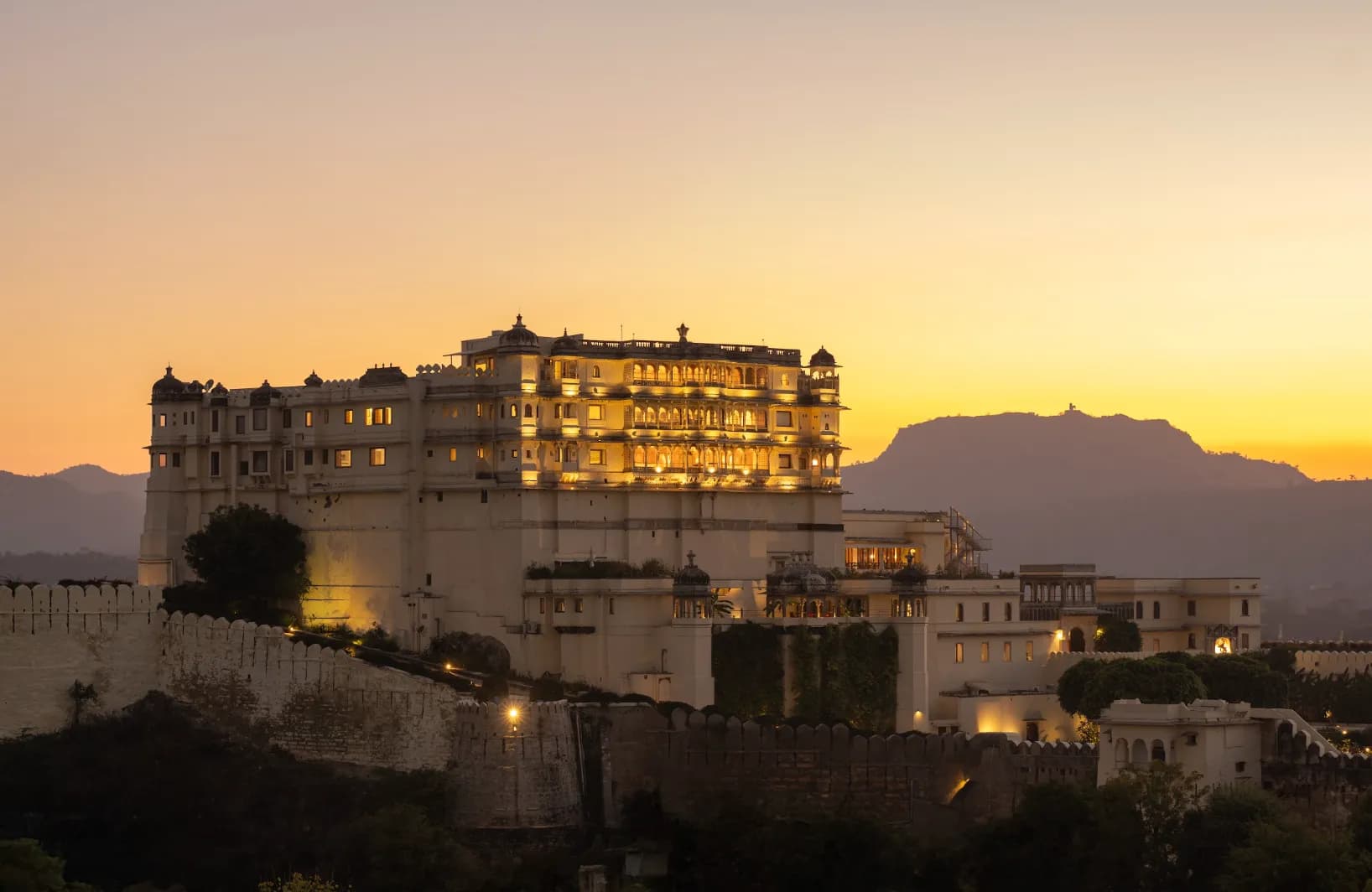
Minimalist restoration defines RAAS Devigarh, a 17th-century hill fort near Udaipur where original mass and stone dominate. Rooms sit quietly within historic volumes, framed by light and water. Cuisine draws on Mewar produce, letting architecture lead.

From a Maharaja's summer residence to twin Gothic-Rajasthani mansions, Shahpura Bagh spreads across 45 acres between lakes and farmland. Suites hold Kashmiri carpets and family-collected art. Seasonal estate cooking, boat rides, birding, and village walks unfold at the land's pace.

Three centuries of continuous occupation define Chanoud Garh, a Rajput fort-palace in Pali. Hand-carved jharokhas and vegetable-dyed ceilings remain intact, with heirloom-furnished suites spread across palace wings. Rajput household recipes, village visits, and temple walks keep feudal domestic life connected to its landscape.

Continuously occupied since the 18th century, Rohet Garh retains original courtyards, ramparts, and working water systems. Thick walls regulate temperature, while rooms hold period furniture. Rural Marwar cuisine, equestrian traditions, and village safaris sustain long-held ties.

At the base of Mehrangarh Fort, RAAS Jodhpur restores a cluster of merchant havelis, preserving layered courtyards and rooftop terraces. Rooms scatter through original chambers reached by meandering passages. Regional Marwari cooking accompanies walks to stepwells, bazaars, shrines, and fort paths.

Within Jaisalmer Fort's 850-year-old bastions, Killa Bhawan occupies rooms carved from yellow sandstone, embedded in the fort's living fabric. Thick stone walls cool interiors naturally. Desert Marwari cooking accompanies daily movement through fort lanes, temples, rooftops, and staircases.

Granted as a jagir in 1645, Ramathra Fort overlooks the Kalisil valley with original ramparts and painted ceilings preserved. Palace suites and rampart-edge tents open onto forest and water. Estate-grown Rajasthani cuisine, boating, jeep safaris, and village walks shape days here.

A 19th-century Gujarati merchant mansion, The House of MG preserves carved wooden facades, jalis, and courtyard hierarchy. Rooms follow domestic scale. Gujarati thalis and pol walks connect the house to Ahmedabad's mercantile past.

Still a family home, Sawantwadi Palace opens select chambers where heritage is lived, not displayed. Ganjifa painting, lacquerware, and courtly music continue under royal patronage. Konkan royal cuisine accompanies these practices.

Within Fort Kochi's mercantile quarter, The Malabar House, an 18th-century Dutch residence, retains courtyard planning and timber structure. Rooms follow original circulation. Coastal Kerala home cooking and port-town walks reflect Kochi's trading past.

Multi-year conservation revived Bari Kothi, a 1774 riverside mansion in Murshidabad, using traditional lime plaster. Anglo-Indian planning merges with Indian materials, with rooms oriented to river views. Bengali household cooking, boat journeys, and durbar halls reveal layered histories.

An active family residence, The Belgadia Palace in Mayurbhanj dedicates its halls to the Chhau dance tradition long supported by the royal household. Odia royal cuisine accompanies rehearsals and performances.

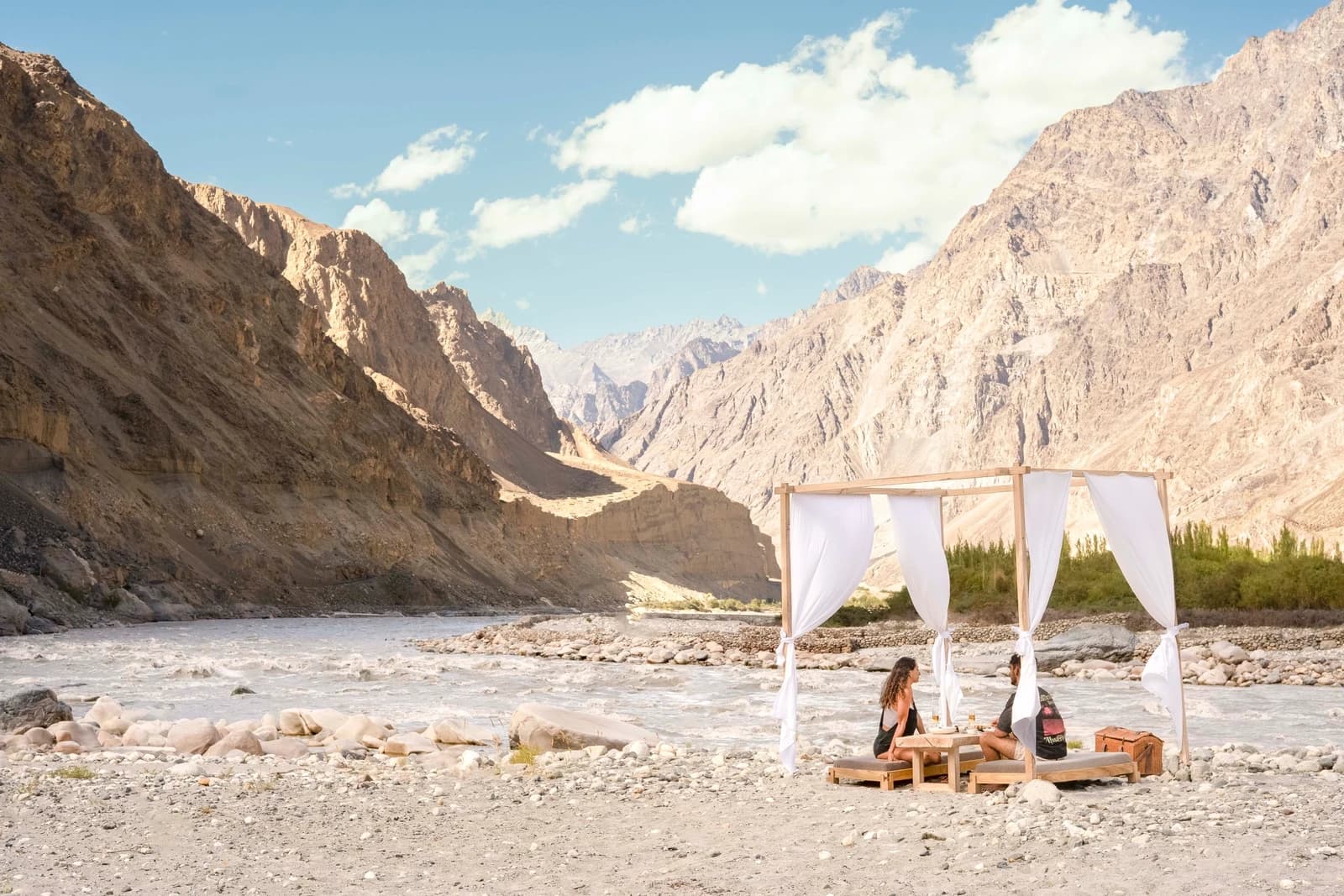
At the Indus-Zanskar confluence, Nimmu House rises in stone and mud brick, its courtyards and terraces tied to agrarian rhythms. Rooms open to fields, while Ladakhi home cooking using barley, apricot, greens, and dairy follows the seasons. Apricot harvests, monastery visits, and village life reveal how the estate sustained generations.

In Bhaktapur, The Nanee conserves Newari domestic architecture through carved timber windows, brick facades, and courtyard sequencing. Rooms follow vertical household organisation. Newari cuisine and temple walks extend domestic life into the old town.